
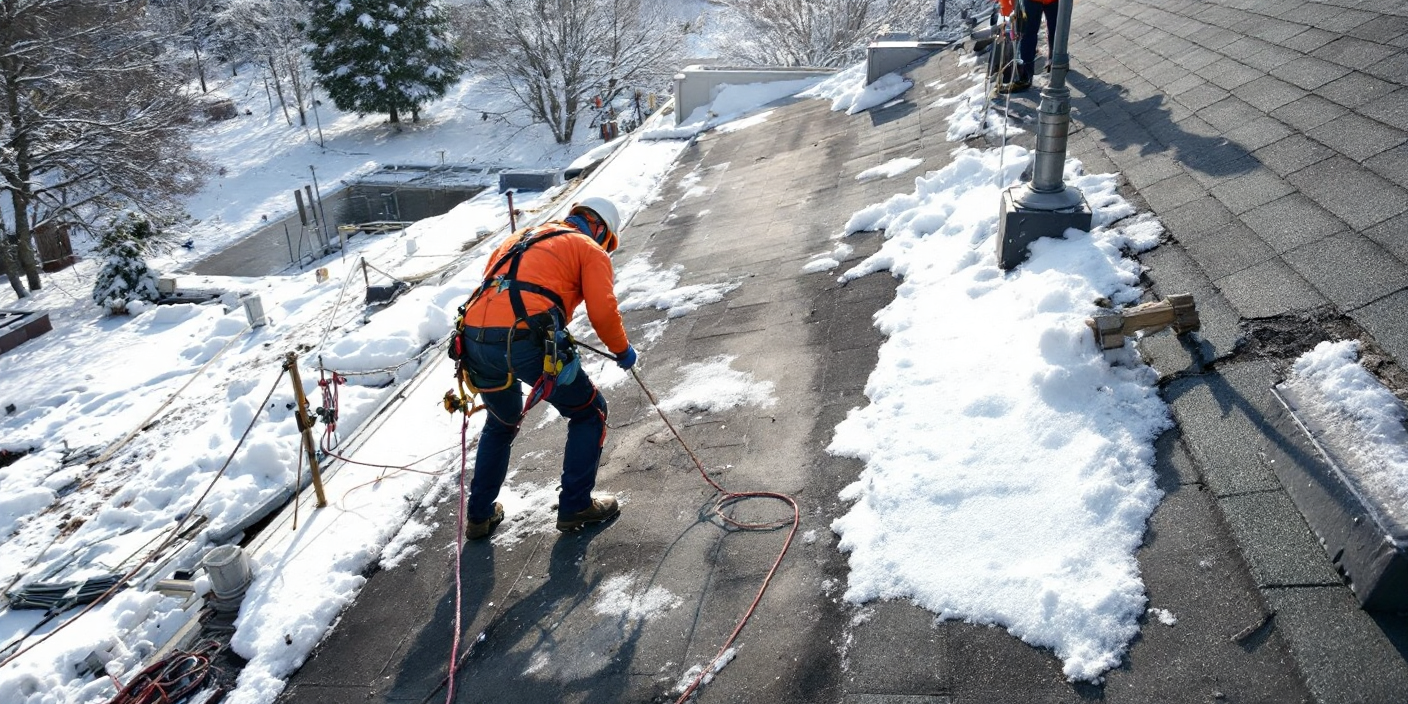
A roof leak is rarely “random.” In Philadelphia rowhomes and small multifamily buildings, leaks usually come from transitions: chimney flashing, parapet walls, pipe penetrations, or aging seams on flat roofs. So, real roof leak repair in Philadelphia starts with tracing the water path—not guessing.
The biggest mistake: patching the wet spot
Water travels. That means the ceiling stain is often far from the entry point. Therefore, a proper leak inspection focuses on:
- Flashing conditions at walls and chimneys
- Membrane seams and terminations
- Ponding areas and drainage points
- Penetrations and edge metal
Repair-first doesn’t mean “quick fix”
A durable repair includes preparation and correct materials. For example:
- Clean, dry surfaces before sealing
- Reinforced repairs at seams and transitions
- Correct termination details to prevent re-entry
- Documentation so you understand what changed
When repairs aren’t enough
Sometimes, the roof system is past its service life. In that case, we recommend replacement only when the data supports it—recurring leaks, widespread seam failures, or persistent ponding that can’t be corrected.
FAQs
Can you repair a flat roof in winter? Often yes, depending on conditions and material compatibility.
Why do leaks keep coming back? Flashing details weren’t corrected, only surface symptoms were patched.
Do I need a full replacement? Not always—diagnostics determine the right scope.