
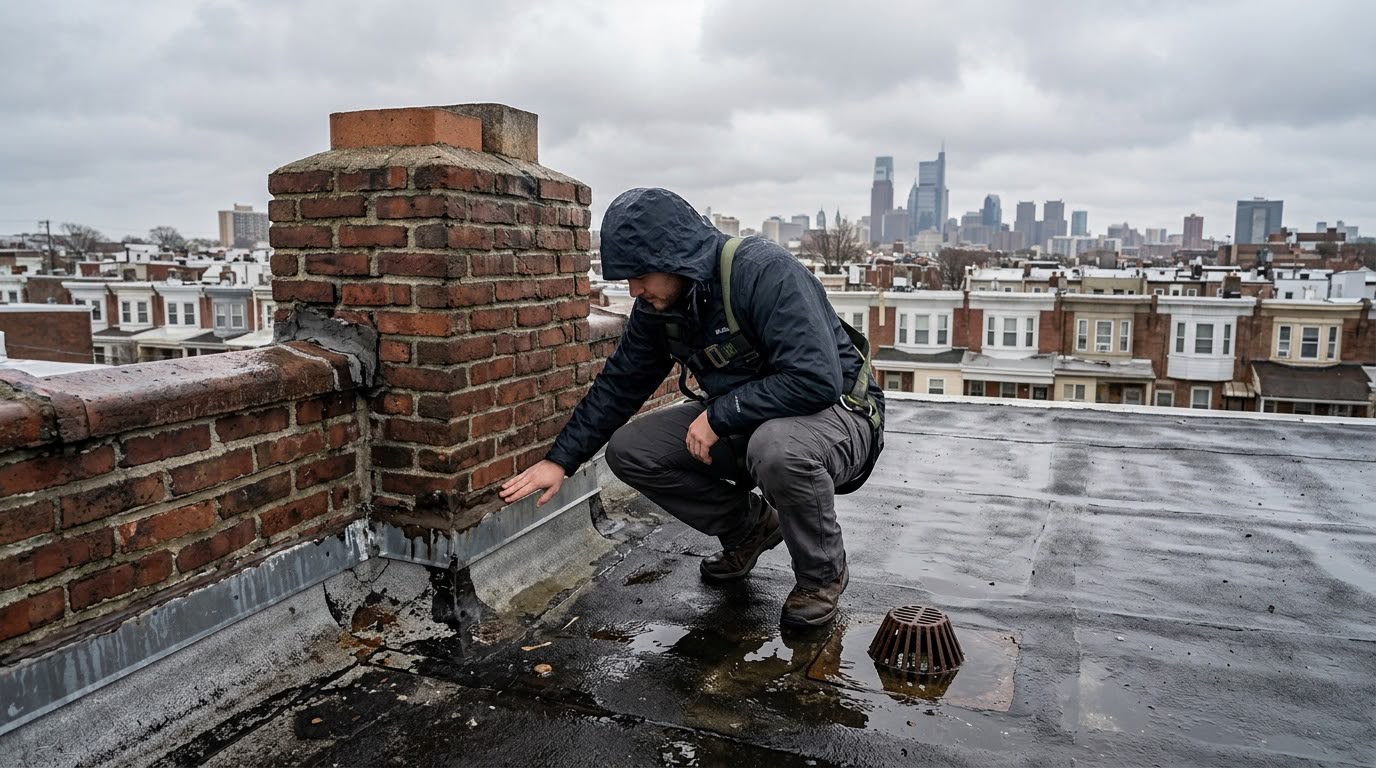
A flat roof that leaks during heavy rain can seem dependable until the next storm. That pattern does not identify the cause by itself. It does, however, provide useful information for a roof leak evaluation.
The amount of rain, its duration, wind conditions, and the delay before an interior stain appears can help a roofing professional organize the investigation. A repair recommendation should connect the observed symptoms with the roof conditions found during the assessment.
Record the leak from inside the property
Photograph the affected ceiling or wall and note when the water first appears. Describe whether the stain grows during the storm or becomes visible afterward. Include earlier repairs and whether they changed the pattern.
Stay off the roof to investigate. Wet conditions and uncertain roof surfaces make an owner’s inspection a poor substitute for professional access. If water is near electrical components or a ceiling appears unstable, keep clear and seek appropriate assistance.
Review drainage and vulnerable details
Flat-roof assessments may include drainage routes, roof penetrations, seams, edges, and transitions to adjoining surfaces. The purpose is to identify what allows water to reach the building rather than assume every leak needs the same patch.
Water can travel before it becomes visible indoors. The spot beneath a stain may therefore be only part of the investigation. Ask how the contractor has connected the interior evidence with the roof findings.
Understand the proposed repair boundary
A useful repair scope explains which detail or area will be addressed and what associated work is included. Ask whether adjacent conditions affect the recommendation and whether further investigation is needed.
If several repair options are offered, compare what each addresses. The smallest visible patch is not necessarily the complete scope, while a broad replacement proposal should also have a clear basis in the roof’s condition.
Keep a record after the work
Save the assessment, photographs, and repair description. If the symptom returns, this history helps the next evaluation begin with better information. Ask what follow-up the contractor recommends and what documentation you will receive.
For a Philadelphia flat roof with an intermittent rain-related leak, contact Philadelphia Roofing Experts to discuss a roof leak repair assessment focused on the actual entry path and surrounding roof details.