
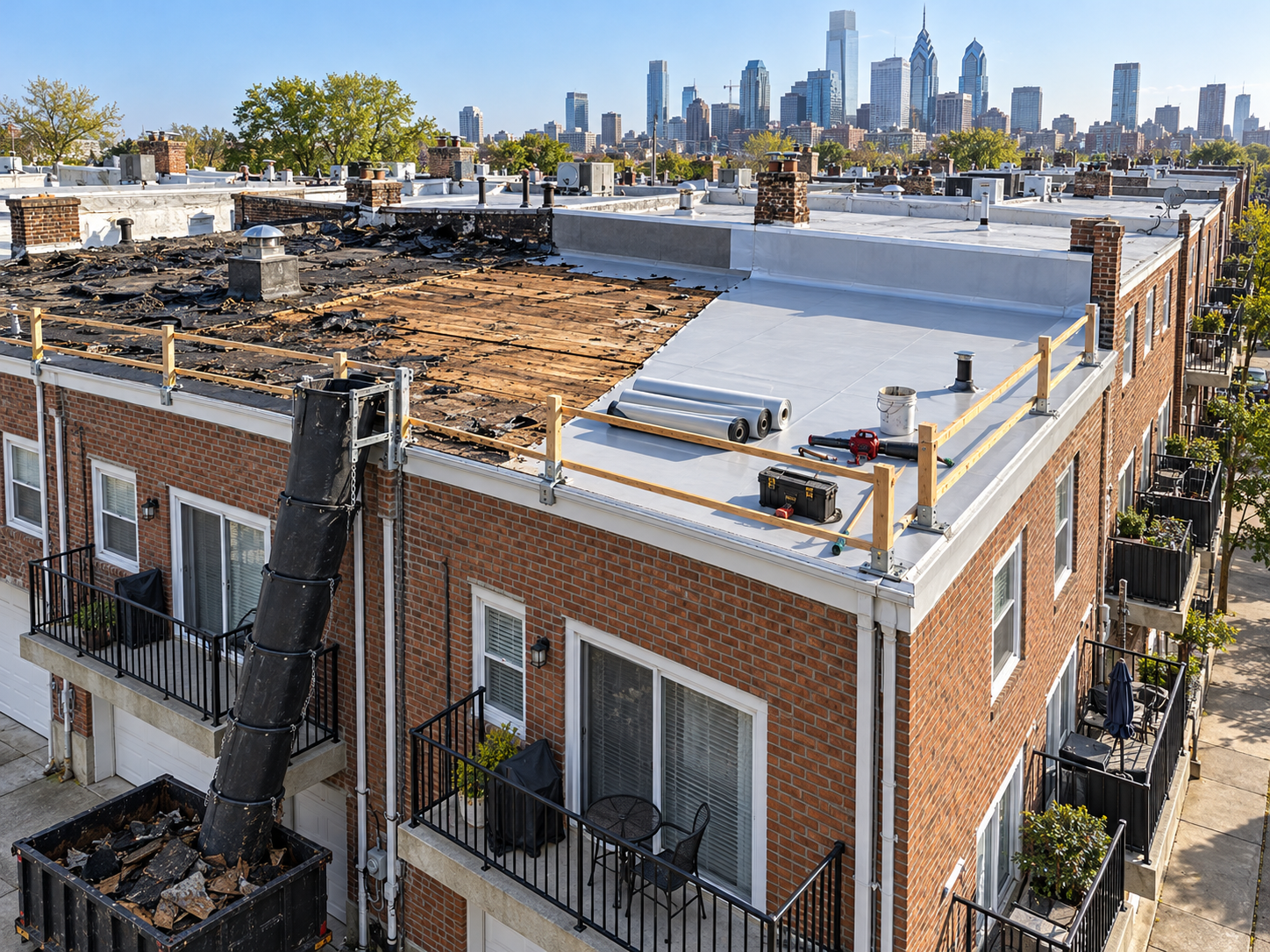
Most flat roof replacements in Philadelphia happen while people are living in the house. In a South Philly, Fishtown, Point Breeze or Kensington rowhome, that means a crew working directly above your bedrooms, sharing parapet walls with your neighbors, staging materials on a narrow street, and tearing off the only thing that keeps water out of the top floor. When the work is planned well, most homeowners are surprised by how manageable it is. When it is not, a sudden storm or a missed detail can turn a one or two day job into a week of stress.
This guide explains what typically happens before, during and after a flat roof replacement on an occupied rowhome, so you know what to prepare, what to ask and what a well-run job looks like.
Before the Crew Arrives
Good roof replacements start days before tear-off. A few things should be settled ahead of time:
- Scope in writing. Confirm whether the job is a full tear-off to the deck or an overlay, which membrane system will be installed, and how parapets, chimneys, hatches, skylights and drains will be handled.
- Deck repairs. Ask how rotted or soft decking will be priced if it is found once the old roof comes off. In older row-homes, some deck replacement is common.
- Permits. Your contractor should explain what permit applies to the job and who pulls it.
- Weather window. Flat roof work depends on dry conditions. Ask how the crew decides whether to start and what happens if rain arrives mid-job.
- Access and staging. Where will the dumpster or truck go? Will materials be hoisted from the street or the rear? Some locations need city approval for street placement.
- Neighbor communication. Since you share parapets and sometimes flashing with the houses on either side, let your neighbors know the dates. Work at the party wall may involve their side too.
Preparing the Inside of the House
Tear-off creates vibration and debris, and in older homes some of it can find its way inside.
- Clear the top floor. Move valuables, electronics and fragile items away from ceilings, especially under skylights and hatches.
- Take pictures and mirrors off top-floor walls. Vibration from tear-off can shake them loose.
- Cover belongings in closets and attic access areas. Dust and old roofing granules can sift through gaps in old plaster or around light fixtures.
- Plan for pets and work-from-home schedules. The noise is real, especially during tear-off.
- Know where your roof hatch is and keep the path to it clear if the crew needs interior access.
Tear-Off Day
On most rowhome flat roofs, tear-off and new installation happen in sections so the house is never left fully open. A typical day looks like this:
- The crew sets up safety equipment, protects the street and neighboring roofs, and stages the dumpster or chute.
- Old roofing is removed down to the deck in a manageable area.
- The deck is inspected. Soft, rotted or broken boards are replaced.
- Insulation, if part of the scope, and the new base layers go down.
- The new membrane is installed and sealed for that section before the crew moves on.
- At the end of each day, any exposed areas are made watertight with temporary tie-ins.
Ask your contractor how much they plan to open at once and how they will protect the house overnight. That one question tells you a lot about how they run a job.
Safety on a Rowhome Roof
Rowhome roofs are small, high and close to the street, which makes fall protection a central part of the job. OSHA maintains a set of fall protection resources for residential construction, including the standards that apply, compliance assistance and publications such as its guide to protecting roofing workers. As a homeowner, you do not need to know the regulations in detail, but you should expect to see the crew using fall protection and keeping the work area organized.
What a safe site looks like from the street:
- Ladders secured and extended properly above the roof edge.
- Workers tied off or protected at open edges where parapets are low.
- Debris lowered through a chute or bagged, not thrown off the roof.
- The sidewalk below protected or kept clear while debris is coming down.
- Torches and hot work, if used, managed carefully near parapets, cornices and wood decking.
If a contractor is vague about safety, take that seriously. A crew that takes shortcuts on safety may take shortcuts on flashing too.
Party Walls, Parapets and the Neighbors’ Roofs
The edges are where rowhome roofs fail most often, and they are also where your roof meets your neighbors’. During replacement, the crew will usually:
- Remove old flashing along parapets and party walls.
- Inspect the masonry and coping for cracks or loose brick.
- Install new base flashing up the parapet and terminate it properly.
- Tie the new roof into the neighbor’s roof where there is no parapet, which requires care so neither roof is compromised.
Talk to your contractor about what happens if the neighbor’s roof is in poor condition at the tie-in. A clean, documented transition protects both houses.
Drains, Scuppers and Gutters
While the roof is open, it is the right moment to address water flow:
- Clean and inspect drains, scuppers and conductor heads.
- Confirm the new roof slopes toward drainage points without leaving standing water.
- Replace corroded drain bodies or leaky scupper liners.
- Check the rear gutter and downspout, since a new roof sends water to the same place the old one did.
Weather Interruptions
Philadelphia summer storms and fall rain can arrive with little warning. A well-organized crew:
- Watches forecasts and avoids opening large areas when rain is likely.
- Keeps tarps and temporary materials on site.
- Seals each section at the end of the day.
- Communicates honestly if work has to pause.
If a storm does hit mid-job and water gets in, document it and let the contractor know right away. Ask in advance how they handle that situation.
Cleanup and Final Walk-through
At the end of the job, a good contractor will:
- Remove debris from the roof, the street, the sidewalk and any neighboring roofs.
- Use a magnet sweep to pick up nails around the house and on the sidewalk.
- Walk the roof with you or share photos of parapets, flashing, drains and penetrations.
- Explain the warranty and maintenance recommendations.
- Close out the permit, if one was required.
Keep the paperwork, photos and warranty together. You will want them if you sell the house or need service later.
Questions to Ask Before You Sign
Most problems on roof replacement day can be traced to questions nobody asked during the estimate. Before you sign a contract, ask:
- Will you tear off to the deck, and how will you price deck repairs if you find rot?
- What membrane system will you install, and what does the warranty cover?
- How many sections will you open per day, and how will you seal them overnight?
- Who pulls the permit, and will you handle any street or sidewalk approvals for the dumpster?
- How will you handle flashing at parapets, chimneys, hatches and skylights?
- What will you do if the neighbor’s roof is in poor shape at the tie-in?
- How will you protect the sidewalk, my neighbors’ roofs and the inside of my house?
- Who is my point of contact during the job, and how will you tell me about delays?
Clear answers, in writing, are a good sign. Vague answers or pressure to sign quickly are a reason to keep looking. A roof replacement is a large investment, and on a rowhome it affects the houses on either side of you as well.
Frequently Asked Questions
Can I stay home during a flat roof replacement? Most homeowners do. Expect noise and vibration during tear-off, and plan to protect top-floor rooms.
How long does a rowhome flat roof replacement take? Many take one to a few days, depending on size, deck repairs, weather and details such as skylights and hatches.
What happens if it rains during the job? The crew should open only what can be sealed the same day and keep temporary protection ready. Ask how they handle unexpected weather before signing.
Will the work affect my neighbors’ roofs? It can, at shared parapets and tie-ins. Let neighbors know the schedule and ask your contractor how the transition will be detailed.
Do I need to be home for the final walk-through? It is a good idea. If you cannot be there, ask for photos of the finished edges, flashing and drains.
If your flat roof is nearing the end of its life, Philly Roofing & Exterior Services can plan the replacement around your household and your neighbors, with clear communication from the first visit to final cleanup. Learn more about our roof replacement services in Philadelphia and schedule an inspection before the next season of storms.