
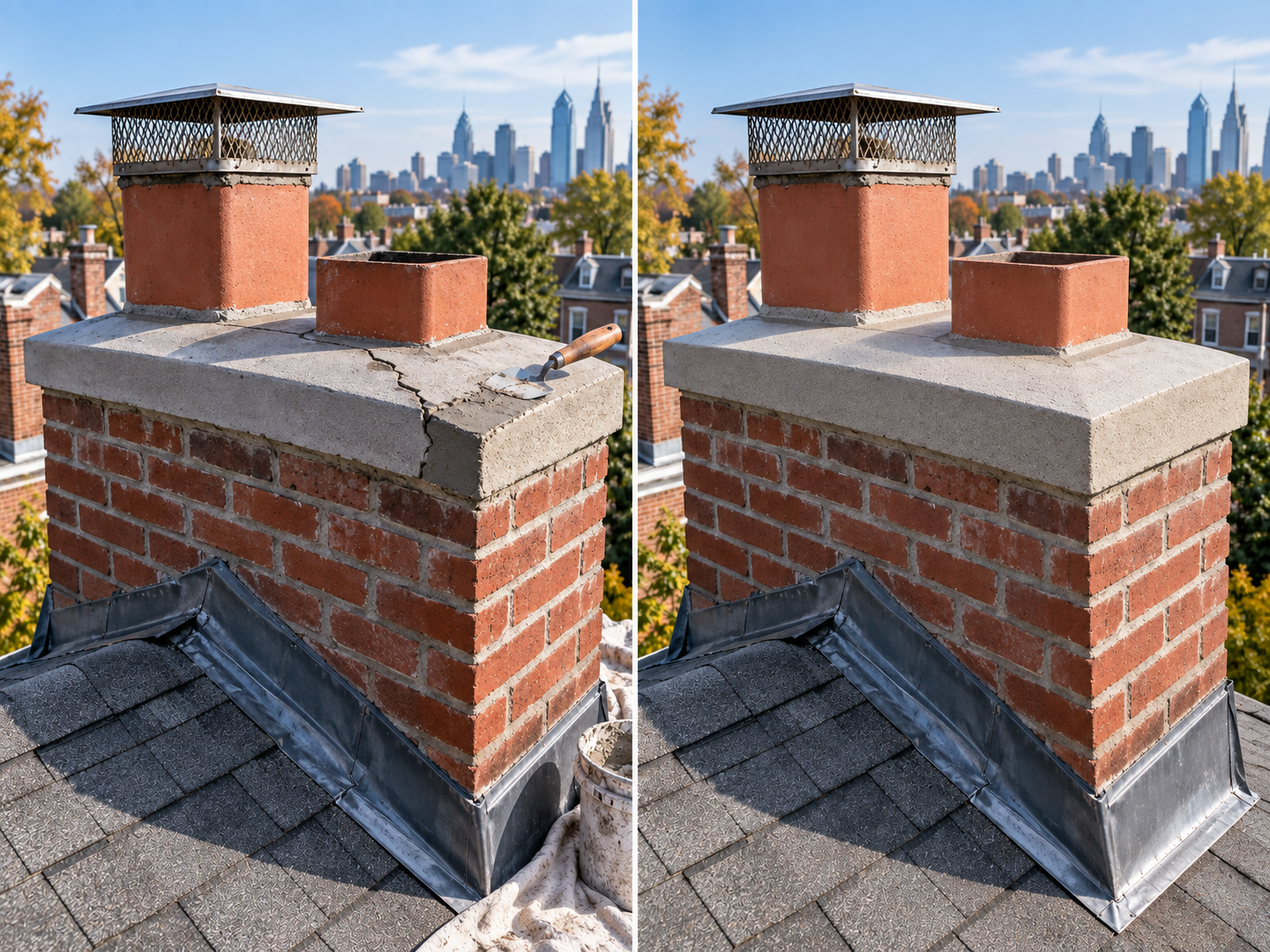
Identifying and Repairing Cracked Chimney Crowns is a practical planning question for property owners in Philadelphia. The right approach depends on the existing conditions, the way the space or system is used, and how the proposed work interacts with surrounding materials. Understanding those details early helps prevent a cosmetic decision from creating a larger construction, maintenance, or code problem later. That review should happen before demolition, fabrication, or installation begins.
What the Chimney Crown Is Supposed to Do
The crown is the sloped masonry or concrete surface at the top of a chimney. It sheds water away from flue openings and protects the masonry below. A proper crown projects beyond the chimney face, slopes outward, and remains separated from flue liners so normal movement does not immediately create cracks.
Why Cracks Lead to Roof Area Leaks
Open cracks absorb rain and snow-melt. Repeated wetting and freeze-thaw cycles can enlarge them, while water may travel into the chimney mass or appear near ceilings and roof framing. The crown, cap, flashing, mortar joints, and roofing should be inspected together because similar interior stains can originate from different points.
Repair or Rebuild Depends on the Failure
Small stable cracks may accept a compatible repair coating after proper cleaning and preparation. Loose sections, poor slope, missing overhangs, or widespread deterioration may justify rebuilding the crown. Smearing roof cement over masonry rarely provides a durable solution and can hide the condition without correcting drainage or movement.
Keep Roofing and Masonry Responsibilities Clear
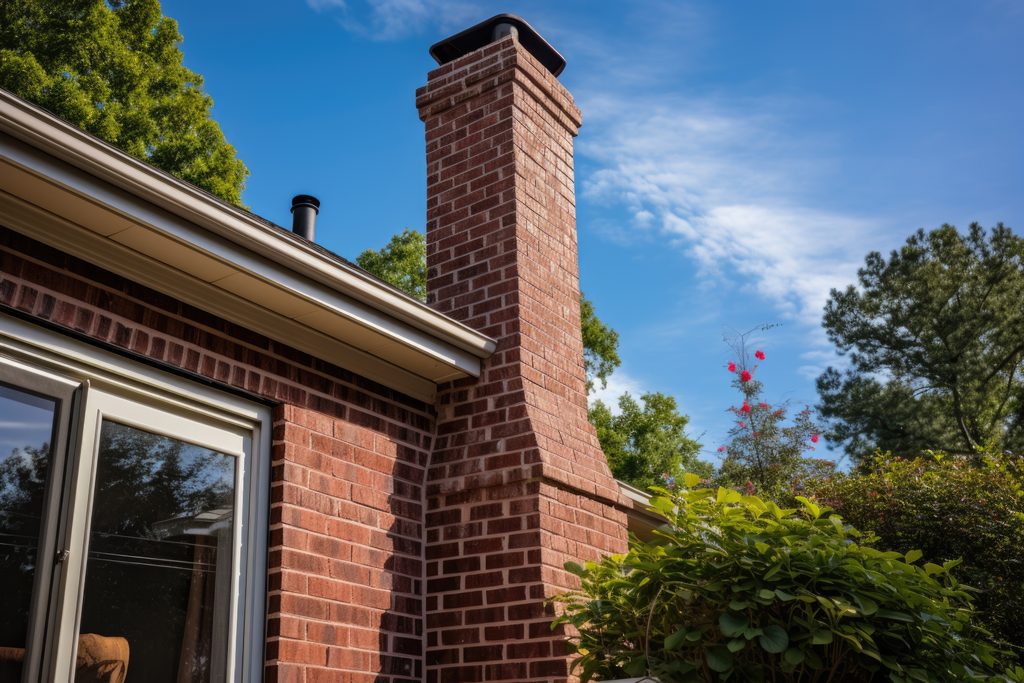
A roofer may address step flashing, counter-flashing, roof transitions, and leak tracing, while substantial chimney masonry can require a qualified mason. Coordinating both scopes prevents a repaired crown from being undermined by failed flashing, or new flashing from being attached to unstable masonry.
Questions to Resolve Before Work Begins
Before authorizing a repair, document when the symptom appears, what changed before it started, and which areas or fixtures are affected. Ask the contractor to separate observation from diagnosis, explain what testing or selective opening is needed, and identify the condition that would change the proposed solution. The written scope should state what is included, how adjacent finishes will be protected, how concealed damage will be handled, and what will be tested before the repair is considered complete. Request photographs of concealed conditions and completed work where access will later be closed. Keep model numbers, material information, test results, permits, and care instructions with the property records so a future service provider can understand what was repaired and how the finished system is intended to perform.
Planning the Next Step
Property owners should compare the visible condition with the broader assembly, confirm any permit or manufacturer requirements that apply, and document the proposed scope before materials are ordered. Guidance from Chimney Safety Institute of America can help frame the technical questions, while an on-site evaluation determines what is appropriate for the individual property. If your roof, skylight, chimney, or gutter system shows signs of trouble, contact Philly Roofing Pros for an evaluation of the affected roof components and appropriate repair options.
Learn more about chimney repair.