
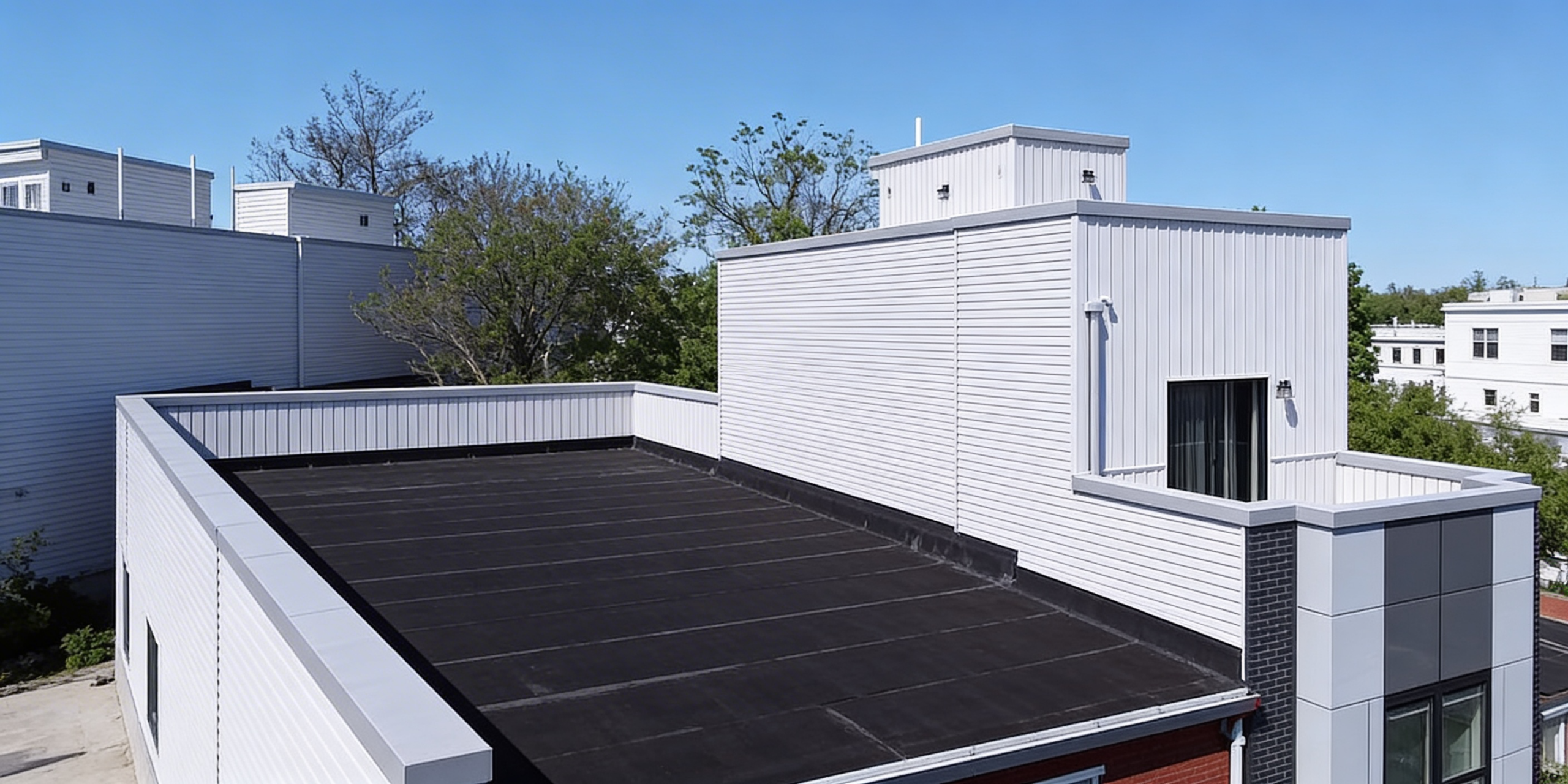
Flat-roof material decisions are often reduced to brand names, but the existing assembly matters just as much as the new membrane. Both modified bitumen and TPO depend on sound decking, drainage, flashing, and correct installation.
Why This Decision Belongs in Preconstruction
South Philadelphia and Point Breeze rowhomes commonly have parapets, scuppers, roof equipment, neighboring roofs at different heights, and years of previous repairs that complicate transitions.
What Local Properties Change
Compare the full system: deck, insulation, attachment method, membrane, seams, edge details, penetrations, and how future maintenance will be performed. Tight access can influence both installation and later service.
What to Verify Before Work Starts
Modified bitumen uses asphalt-based sheets and TPO uses heat-welded thermoplastic seams. Neither is automatically the better choice for every property; compatibility with the roof geometry and installer execution matters more than a generic ranking.
How the Finished Work Should Perform
Before a recover or tear-off is chosen, check moisture, soft areas, roof thickness, deck condition, old flashing, and drainage. A premium membrane cannot reset a failing base assembly.
Frequently Asked Questions
Is TPO always better than modified bitumen?
No. Performance depends on the roof design, assembly, detailing, installation, and maintenance.
Can a new membrane go over an old roof?
Sometimes, but existing moisture, deck condition, layers, drainage, and system requirements should be evaluated first.
Which system is easier to repair later?
Both can be repairable when the system is identified and compatible methods are used; access and detailing also matter.
Plan the Next Step
Philly Roofing LLC can inspect the existing assembly and explain which flat-roof replacement approach fits the property instead of forcing one material onto every roof.
Helpful source: U.S. Department of Energy – Home Upgrades