
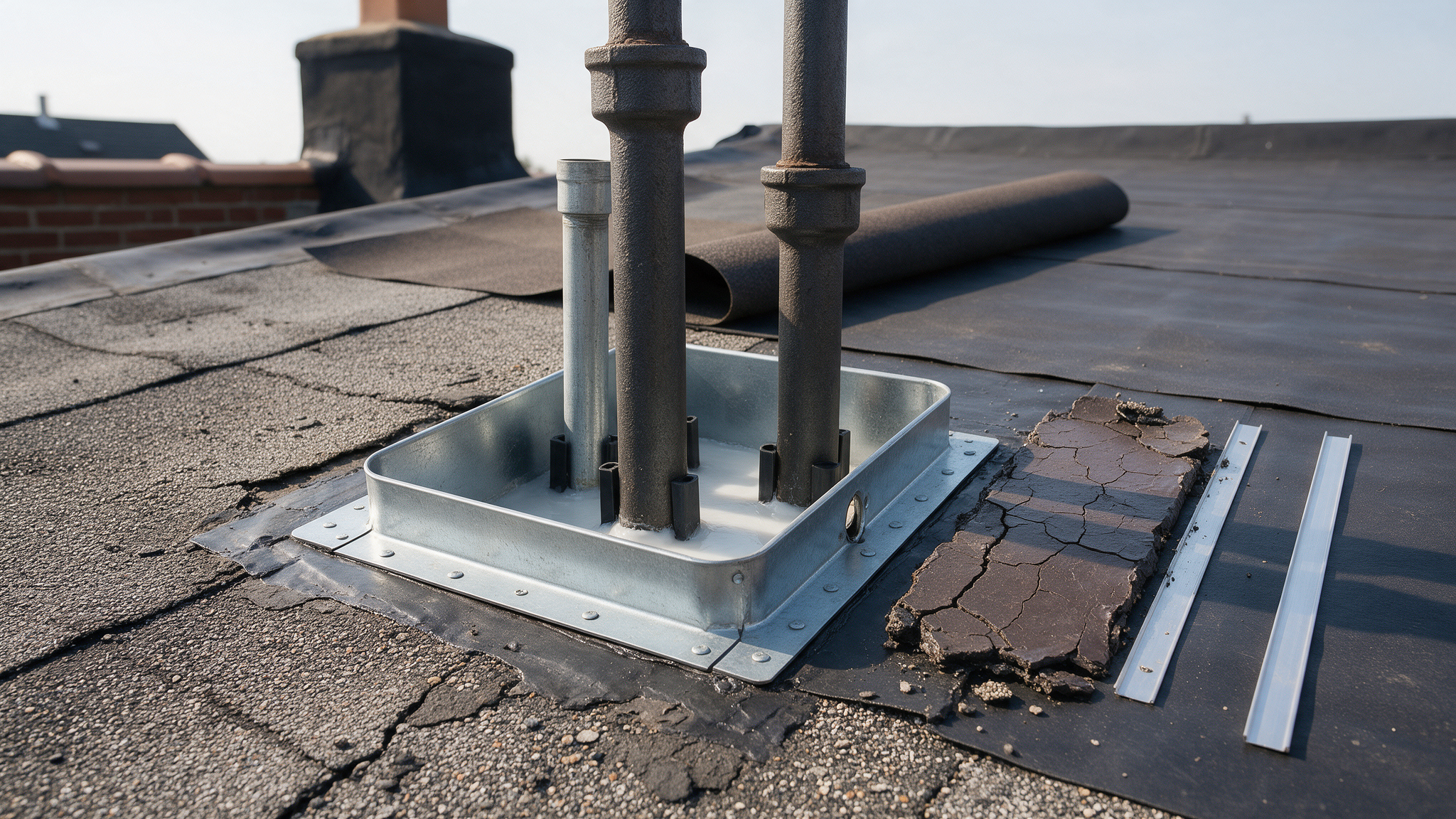
Older low-slope roofs often use pitch pockets or pitch pans around groups of pipes and irregular penetrations. As sealant shrinks, cracks, or separates from the metal, the pocket can become a small reservoir that directs water into the roof assembly. For homeowners in South Philadelphia, Center City, Kensington, and Port Richmond, this is the kind of detail that can decide whether a renovation or repair remains durable after the visible finish is complete.
The primary search intent behind pitch pocket roof repair Philadelphia is practical: understand what the condition means, what should be checked before work proceeds, and how to avoid closing the assembly before the real cause is understood. The goal is not to over-complicate the project; it is to make the scope match the condition that is actually present.
Why This Detail Matters
The visible symptom is only one part of the decision. A contractor also needs to understand whether the metal pocket is still securely bonded to the membrane, cracks or separation in the pourable sealer, and how those findings affect the surrounding work. Resolving those questions before finish work protects the new materials and helps keep a localized detail from turning into avoidable rework later.
What a Professional Checks
A professional review typically includes:
- Whether the metal pocket is still securely bonded to the membrane
- Cracks or separation in the pourable sealer
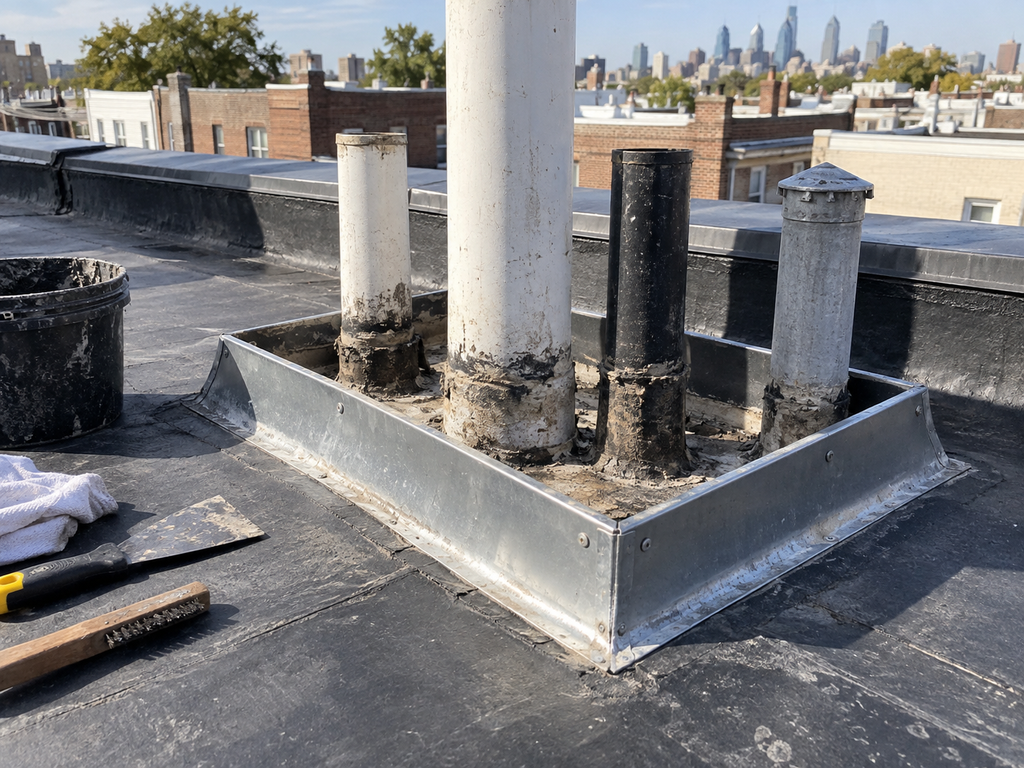
- Corrosion, movement, or abandoned pipes inside the pocket
- Soft or saturated roofing around the penetration
How the Work Is Planned
A proper repair starts by identifying whether the pocket itself can be rebuilt or whether the membrane and flashing around it also need replacement. The area should shed water, accommodate movement, and use compatible materials rather than a random surface coating. The best result comes from coordinating the hidden construction with the finish requirements so one trade is not forced to undo another trade’s completed work.
This is where a focused commercial service page should receive the strongest internal support. Learn more about roof repair and how the broader project can be coordinated around the condition described here.
Common Failure Points
Smearing roof cement over the top may seal the visible crack briefly while leaving failed metal edges or wet insulation untouched. Filling a pocket without cleaning and preparing the existing materials can also lead to early separation. A strong scope separates a cosmetic correction from work that affects performance, access, drainage, structure, or serviceability.
When the Scope May Need to Expand
Widespread membrane deterioration or trapped moisture around the penetration can justify a larger roof-repair area than the pocket alone. That decision should be made before the area is covered, painted, tiled, sided, or otherwise treated as complete.
Reference: Philadelphia Department of Licenses and Inspections. Requirements and field conditions vary by project, so the applicable authority and project-specific professionals should guide final decisions.
Plan the Next Step
Philadelphia Roofing Experts can evaluate low-slope roof details, identify the actual water-entry path, and build a repair scope around the failed component instead of relying on a broad surface patch.
https://www.phila.gov/departments/department-of-licenses-and-inspections