
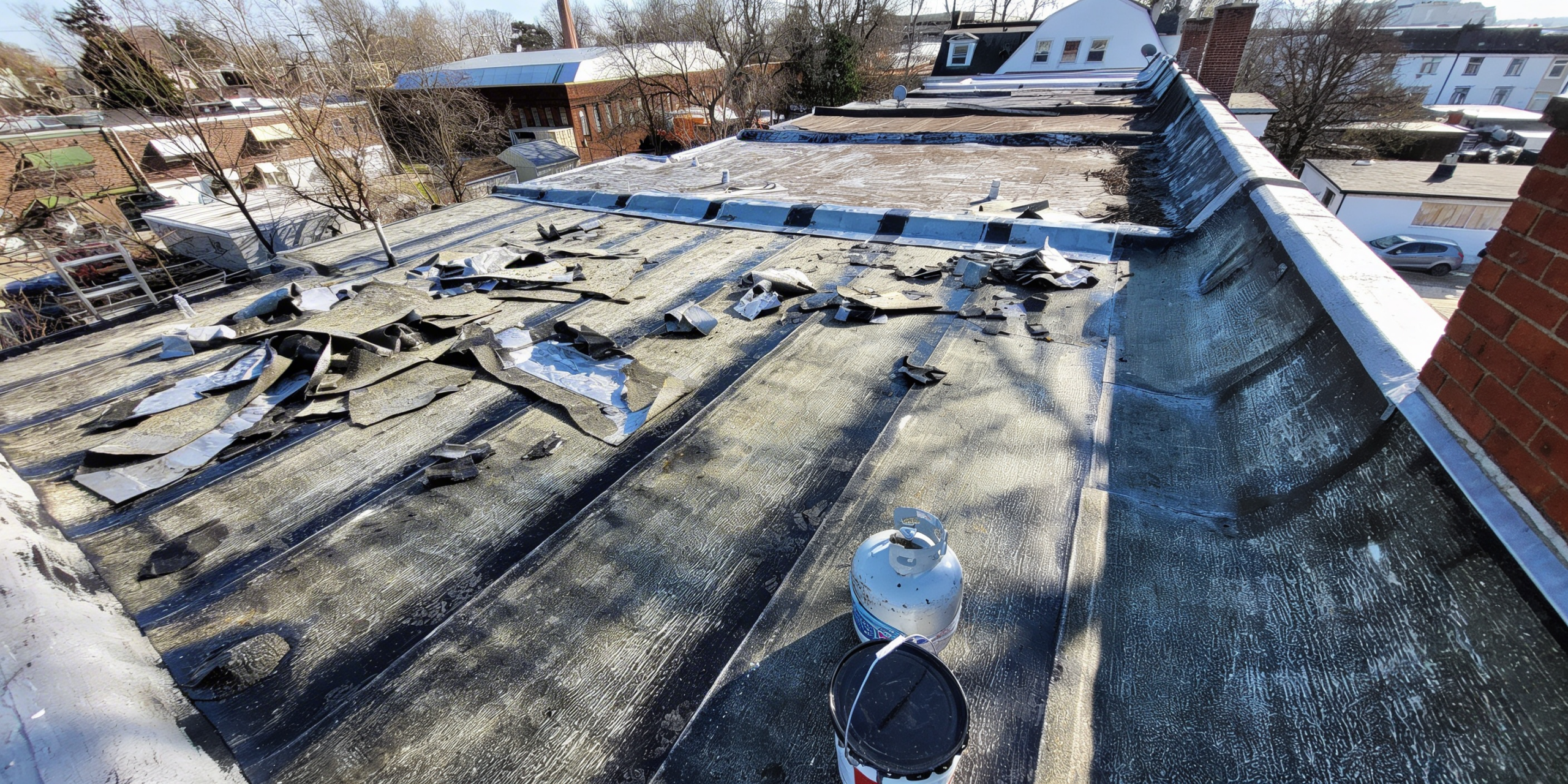
If you’re in Kensington, Port Richmond, South Philly, or Center City, winter is when a roof either proves its integrity—or exposes its weak points. The biggest mistake homeowners make is assuming the stain location is the leak location.
In reality, water often enters at one point and travels along decking, framing, or parapet walls before it shows up inside.
The 4 most common reasons patches fail
1) Flashing is the real problem
Patches often address membrane surface, not transitions.
2) Drainage is compromised
Ponding water and clogged drains create recurring pressure points.
3) Penetrations weren’t sealed correctly
Vents, skylights, pipe boots, HVAC curbs—these are frequent failure zones.
4) Hidden saturation exists
If insulation or decking is wet, surface patches don’t reset the system.
Post-leak interior risk: moisture and mold
If a roof leak persists, interior materials may remain damp long enough to create mold risk. EPA guidance emphasizes moisture control as the primary solution.
What a real leak inspection includes
- penetration checks + seal integrity
- perimeter edges + parapet transitions
- drainage pathways + ponding zones
- correlation between interior staining and roof geometry
- EPA Mold Cleanup guidance (post-leak risk + steps)