
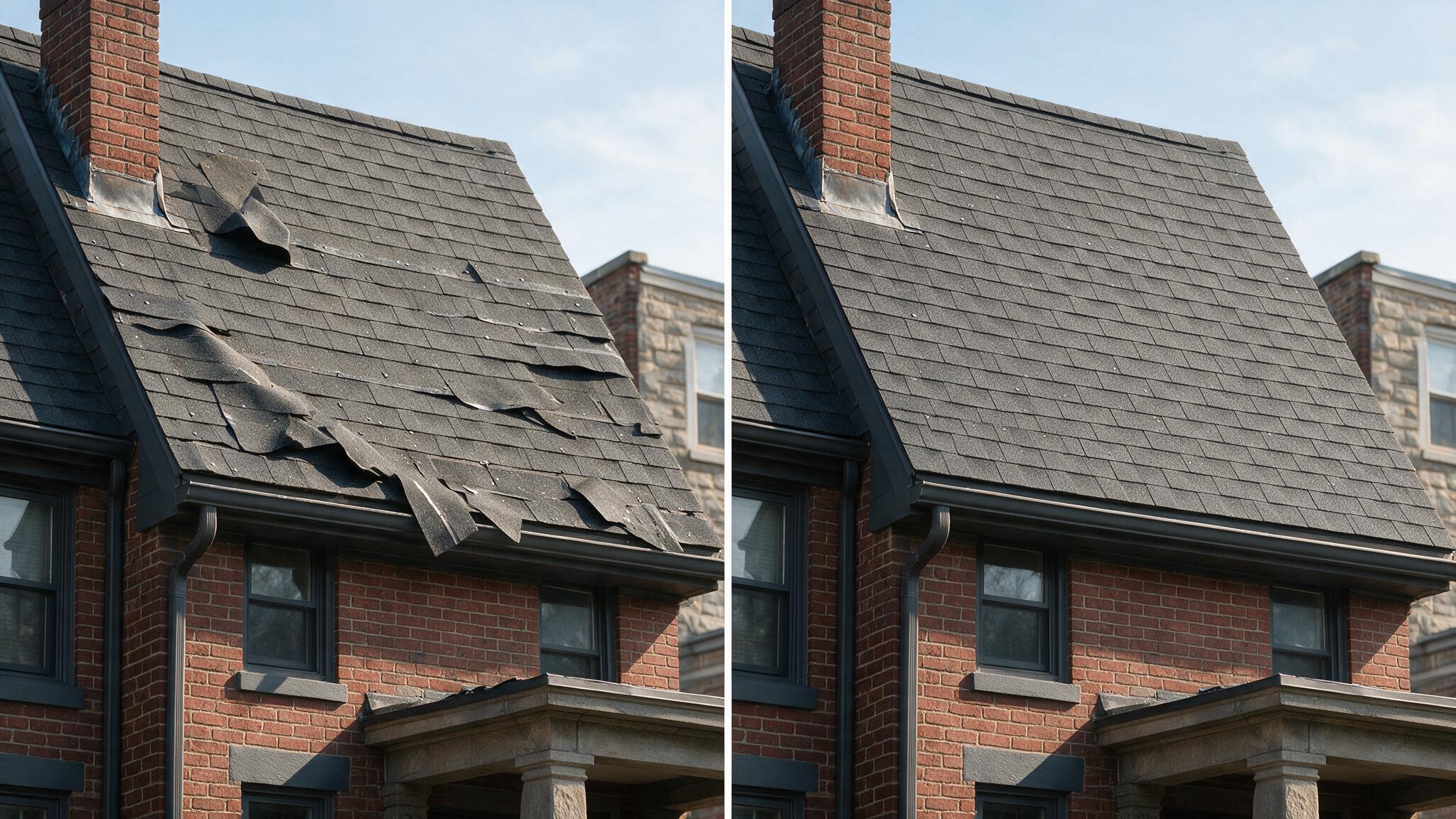
Projects involving wind damaged shingle repair Philadelphia often look simple in finished photos, but the difficult decisions happen earlier. In Manayunk / Roxborough, field measurements, hidden conditions, trade coordination, and long-term serviceability all influence the final scope. Wind damage does not always remove a shingle completely; tabs can lift, adhesive seal strips can release, and fasteners can pull through or sit outside the intended nailing zone.
Coordinate the Hidden Details
An inspection should look for creased tabs, broken corners, exposed fasteners, damaged ridge materials, and patterns that indicate broader attachment problems rather than one isolated missing piece. Before pricing or demolition is finalized, document dimensions, access, adjacent conditions, and any signs that the existing work has already been altered. That gives the contractor a reliable baseline and helps separate a focused repair from a scope that needs broader correction. In older Philadelphia-area and South Jersey properties, this step is especially important because previous work may not match current products, drawings, or assumptions.
Resolve the Technical Conflicts Early
Repairability depends on shingle age, brittleness, color availability, surrounding seal integrity, and whether lifting is caused by storm exposure or installation defects. Small conflicts become expensive when one trade covers another trade’s work or when a finish is fabricated before rough dimensions are verified. The project plan should therefore identify who owns each transition, what must remain accessible, and which decisions depend on field measurements. Material selections should follow those constraints rather than forcing the building to fit a product that was chosen too early.
Connect the Trades Before Closing the Work
Localized replacement should restore underlayment and flashing conditions where needed instead of forcing new shingles over damaged or contaminated surfaces. Durability comes from solving the cause, building the layers in the correct order, and leaving the finished system maintainable. Homeowners in Manayunk / Roxborough should be cautious of a cosmetic fix when movement, moisture, structural weakness, or service access suggests a deeper condition. The right scope may be localized, but that decision should follow inspection rather than guesswork.
What This Means for Local Property Owners
For someone comparing options for wind damaged shingle repair Philadelphia, the useful question is not simply which product looks best. The stronger question is which scope fits the actual property, protects the surrounding work, and can be serviced later without unnecessary demolition. Related searches such as wind lifted shingles Philadelphia and missing shingle repair Philly often point to the same need: accurate diagnosis first, then a coordinated plan that matches the building and the intended use.
Frequently Asked Questions
Can lifted shingles reseal on their own?
Some seal strips may rebond in warm conditions, but creased, torn, displaced, or poorly fastened shingles should be evaluated rather than assumed to recover.
Does one missing shingle mean the whole roof needs replacement?
No. The decision depends on roof age, overall condition, damage extent, and whether reliable matching repairs are possible.
Why does fastener placement matter?
Fasteners outside the intended nailing area may not secure both shingle layers correctly and can reduce wind resistance.
Plan the Next Step
If you are planning wind damaged shingle repair Philadelphia in Manayunk / Roxborough, Philly Roofing can help evaluate the existing conditions, define a practical scope, and coordinate the work around long-term performance. Learn more about Roof Repair Services at https://phillyroofingpros.com/services/roof-repair/ and schedule a project consultation before materials, demolition, or finish selections are finalized.
Helpful homeowner resource: FEMA – Building Science