
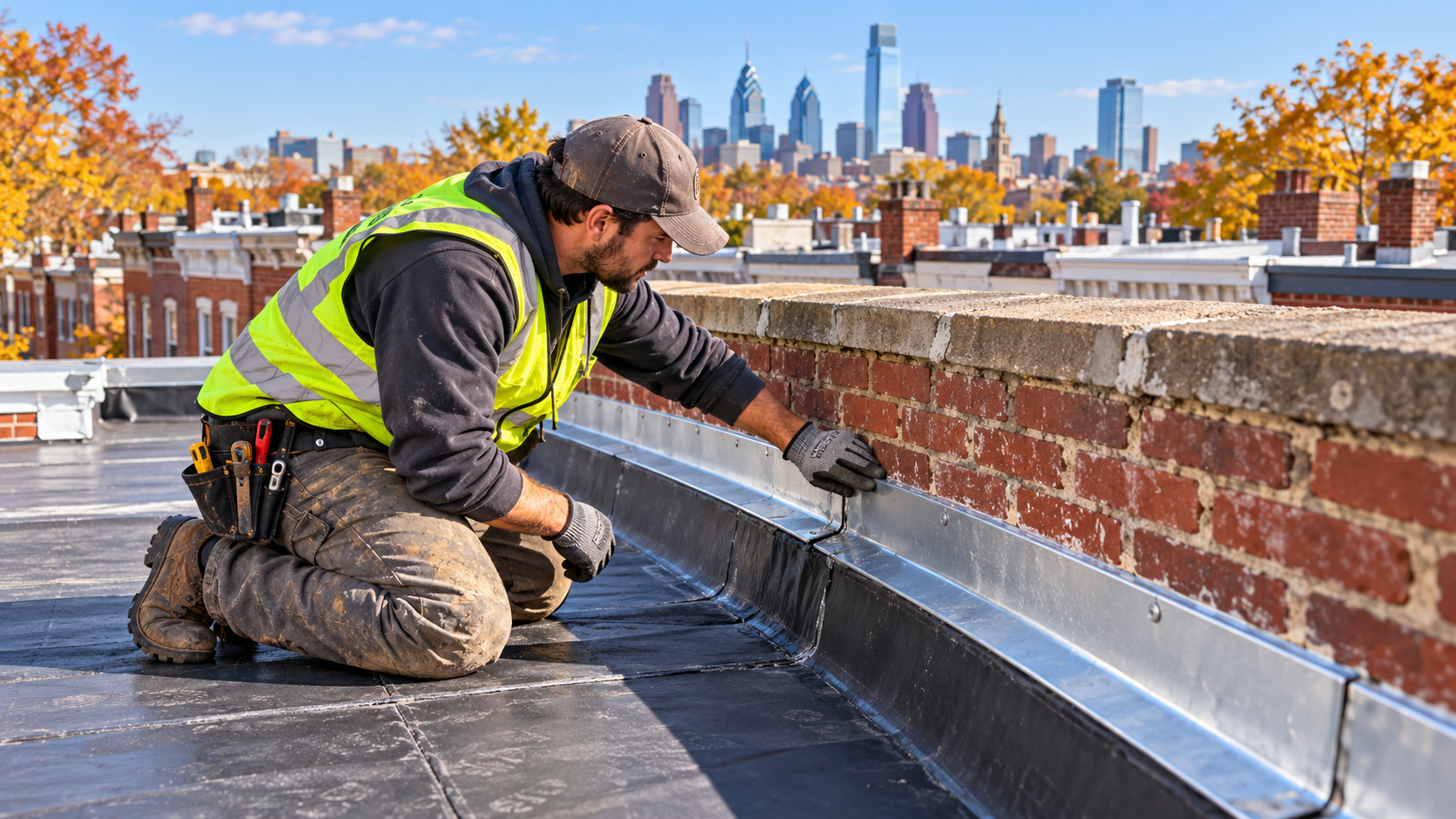
Cold weather does not automatically mean “no repairs”
By late October, Philadelphia property owners start asking whether a roof leak must wait until spring. The answer depends on the roof system, the specific repair product, substrate temperature, moisture, wind, and the condition being repaired. Some repairs can be completed successfully in cool weather; others require warmer, drier conditions or a temporary stabilization plan.
The key is to avoid treating every flat roof the same. Modified bitumen, EPDM, TPO, liquid coatings, mastics, tapes, primers, and sealants all have different installation limits. A repair method that works on a dry 60-degree afternoon may not bond correctly on a damp membrane near freezing.
Temperature affects primers, adhesives, and sealants
Roofing materials are chemical systems. Primers need time to flash, adhesives need the right temperature range to develop bond strength, and sealants need conditions that allow them to cure. Cold surfaces can slow these processes. Some products are formulated for lower-temperature use, while others should not be applied below the manufacturer’s published limits.
This is why the repair scope should name the material or system being used instead of promising a generic “patch.” A contractor should verify the product data for the actual membrane and forecast conditions. If the required temperature window cannot be met, the safer option may be temporary protection until a permanent repair can be completed.
Moisture matters as much as air temperature
A cold but dry roof can be a better repair environment than a warmer roof covered with condensation or residual rainwater. Adhesion to a wet, frosted, or contaminated surface is unreliable. The substrate must be evaluated and prepared according to the repair material’s requirements.
Water may also be trapped below the visible membrane. If insulation or decking is saturated, surface sealant alone may not solve the problem. The contractor should determine whether the leak is localized at a seam or flashing detail, or whether the assembly has broader moisture damage that changes the scope.
When temporary stabilization is the correct first step
During an active leak, the immediate priority is to limit interior damage and keep the roof safe. In poor weather, that may involve a compatible temporary patch, controlled water diversion, securing a loose detail, or another stabilization method that does not pretend to be the final repair.
Temporary work should be documented clearly. The homeowner should know what was stabilized, what conditions remain uncertain, and when the permanent repair should be revisited. This protects against the common problem of a temporary patch being forgotten until the next major storm.
Fall inspections are valuable before freeze-thaw cycles intensify
Late fall is a useful time to inspect seams, flashings, parapet transitions, drains, roof edges, and previous repair areas before winter weather makes access more difficult. Small openings that admit water can become more troublesome when repeated wetting and freezing affect adjacent materials.
The inspection should focus on condition rather than age alone. A relatively young roof can have a localized detail failure, while an older roof may still have serviceable areas that do not require complete replacement. Philly Roofing LLC’s repair-first approach is most useful when the diagnosis identifies the real weak point rather than automatically converting every leak call into a replacement proposal.
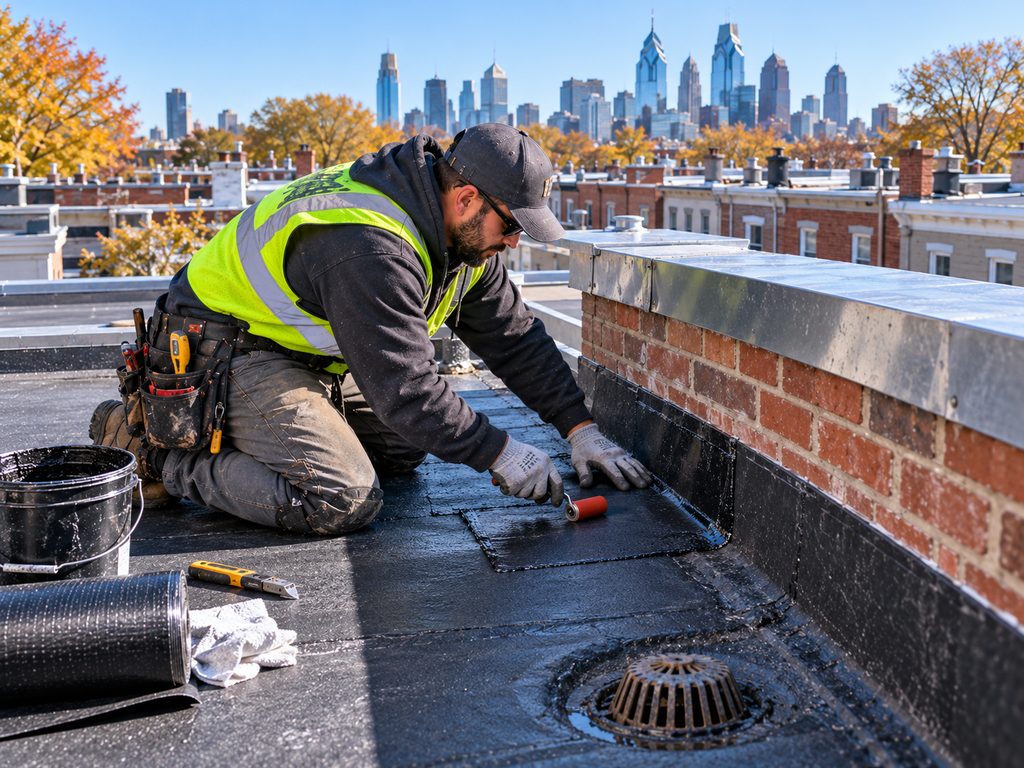
What to ask before approving a cold-weather repair
Ask what membrane or roof system is present, what product will be used, whether that product is approved for the expected temperature, how the surface will be dried and prepared, whether hidden moisture is suspected, and whether the work is temporary or permanent. Those questions make the proposal easier to compare and reduce the risk of a patch that looks finished but never bonded correctly.
If your Philadelphia row home or commercial property is leaking as temperatures fall, Philly Roofing LLC can evaluate whether a targeted repair can be completed now or whether stabilization and a planned follow-up repair is the better approach.
Frequently Asked Questions
Can a flat roof leak be repaired in winter?
Sometimes. The repair depends on membrane type, dry substrate conditions, product temperature limits, and the exact failure.
What if it is too cold for the permanent product?
A contractor may stabilize the leak with a temporary compatible method and schedule the permanent repair when installation conditions improve.
Does cold weather mean the roof needs replacement?
No. Temperature does not determine replacement by itself; overall membrane, flashing, drainage, deck, and moisture conditions matter.