
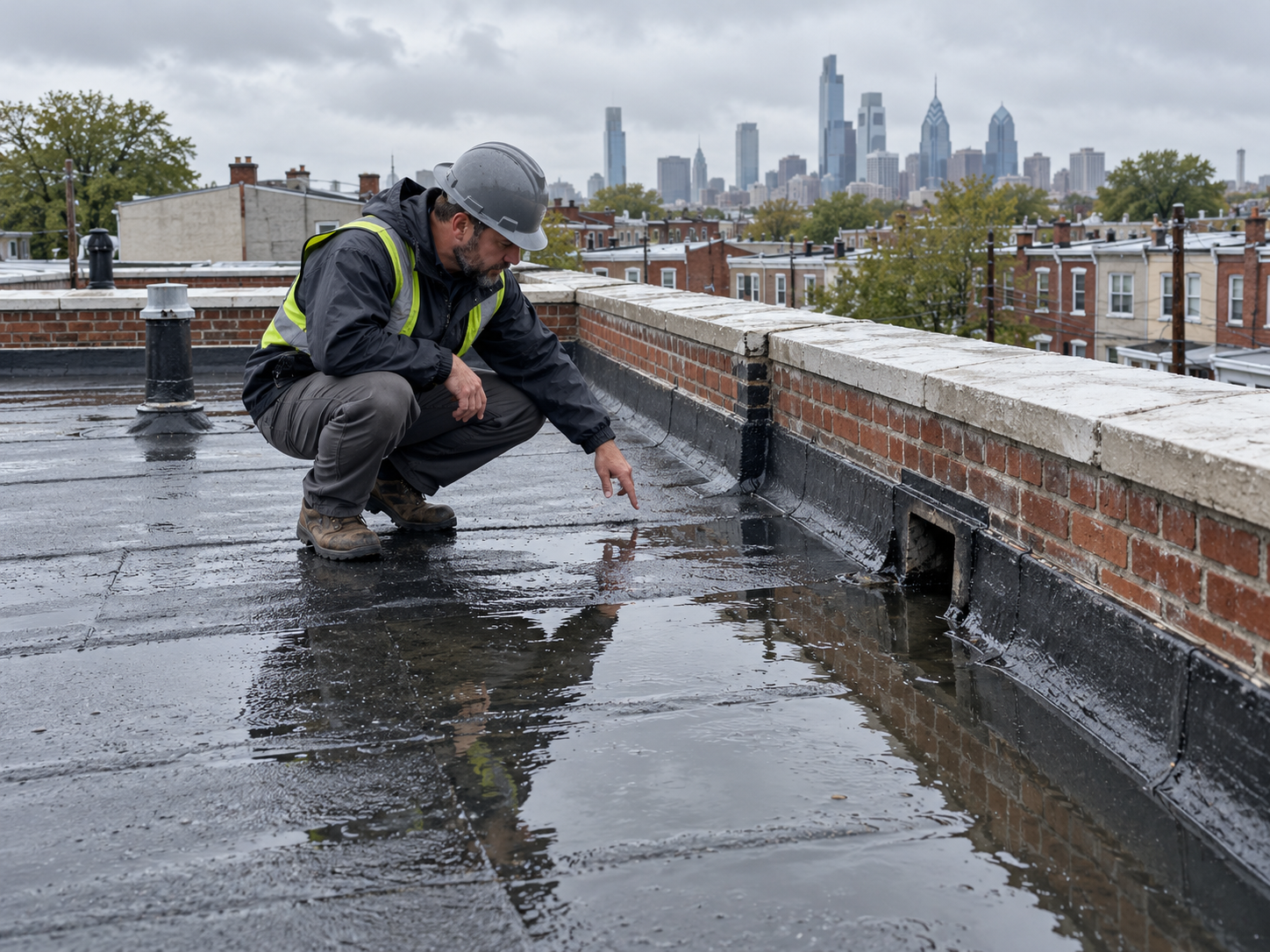
Standing water on a flat or low-slope roof is a recurring challenge for property owners across South Philadelphia, Northern Liberties, Fish-town, and West Philadelphia. Because classic Philadelphia row-homes and commercial buildings utilize modified bitumen, TPO, EPDM, or built-up roof (BUR) membranes designed with minimal slope, precipitation must drain efficiently through scuppers, internal drains, or rear gutter systems.
While low-slope roof membranes are manufactured to resist moisture, water remaining in standing pools longer than 48 hours after rain—a condition known as ponding water—accelerates membrane degradation, adds significant dead load to underlying roof joists, and dramatically increases the risk of interior ceiling leaks.
1. Root Causes of Flat Roof Water Accumulation
Understanding why water ponds on a flat roof is essential before applying superficial roof coatings or liquid sealants that temporarily conceal underlying defects. An experienced roofing inspector evaluates four primary factors:
- Blockage at Drainage Points: Accumulation of organic debris, leaves, plastic bags, or sediment surrounding scupper openings, conductor heads, or internal drain strainers.
- Inadequate or Degraded Tapered Insulation: Flat roof systems rely on tapered polyunsaturate (polyiso) insulation boards to slope water toward drains. Age or improper installation creates low spots where water settles.
- Structural Joist Deflection: Over decades, wooden roof rafters on historic row-homes can sag under heavy snowfall, HVAC units, or multiple historic roofing layers, creating a recessed depression in the deck.
- Parapet Wall Counter-Flashing Failure: Trapped water along masonry parapets often stems from deteriorated metal counter-flashing, allowing water to migrate behind the membrane edge rather than reaching the drain.
2. The Invisible Damage Caused by Prolonged Ponding
Ponding water acts as a magnifying lens under direct sunlight, intensifying UV radiation that breaks down asphaltic compounds in modified bitumen and weakens seams in EPDM and TPO membranes. During winter months, trapped standing water undergoes repeated freeze-thaw cycles. As ice expands, it forces seams apart and creates micro-tears that allow water to reach structural roof decking, rotting pine joists and saturated plaster ceilings below.
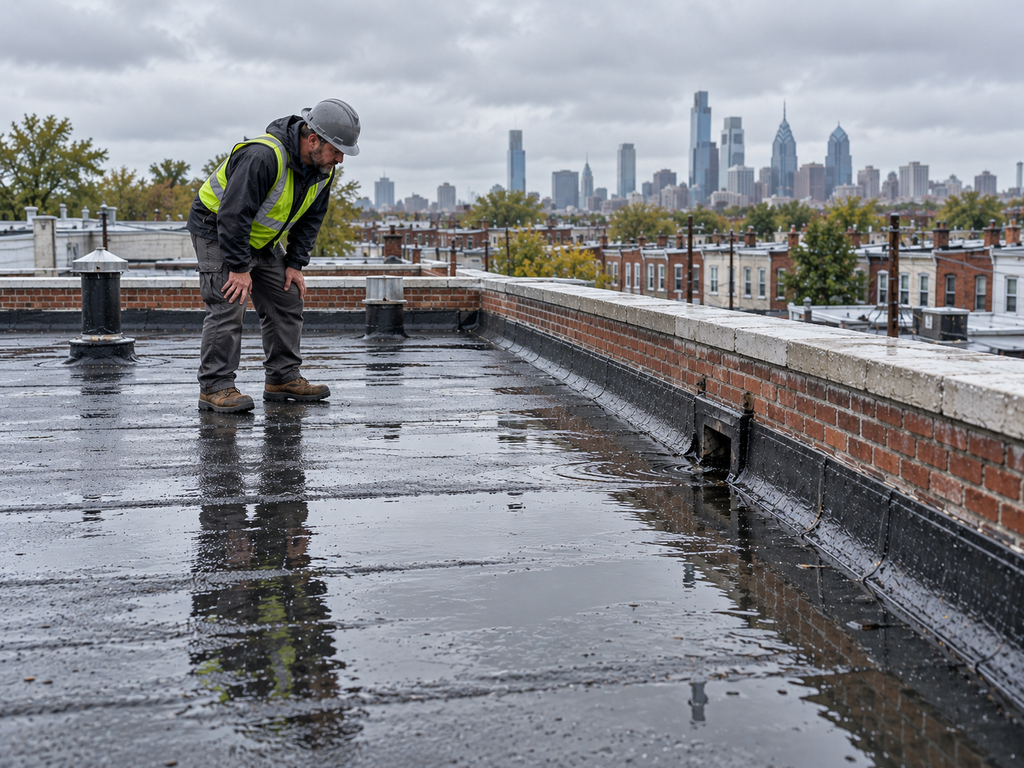
3. Load Limitations and Municipal Permit Considerations
Water weighs approximately 5.2 pounds per square foot per inch of depth. A 10-foot by 10-foot ponding area filled with two inches of standing water adds over 1,000 pounds of localized dead load to historic wooden joists. Correcting severe slope defects by adding tapered insulation or altering structural framing requires adherence to local building standards.
Before undertaking major structural roof modifications or deck replacements, consult the official Philadelphia building and repair permit guidelines to confirm structural plan review requirements.
4. Developing a Long-Term Drainage Repair Strategy
Effective roof repair focuses on correcting water flow rather than applying temporary elastomeric coatings over wet substrates. A comprehensive scope from Philadelphia Roofing Experts may involve installing crickets around chimneys, re-tapering insulation near parapets, clearing and enlarging scuppers, or replacing sagging deck boards.
Protect your property from hidden structural damage caused by standing water. Explore our specialized roof repair services to schedule a comprehensive roof inspection and drainage evaluation today.