
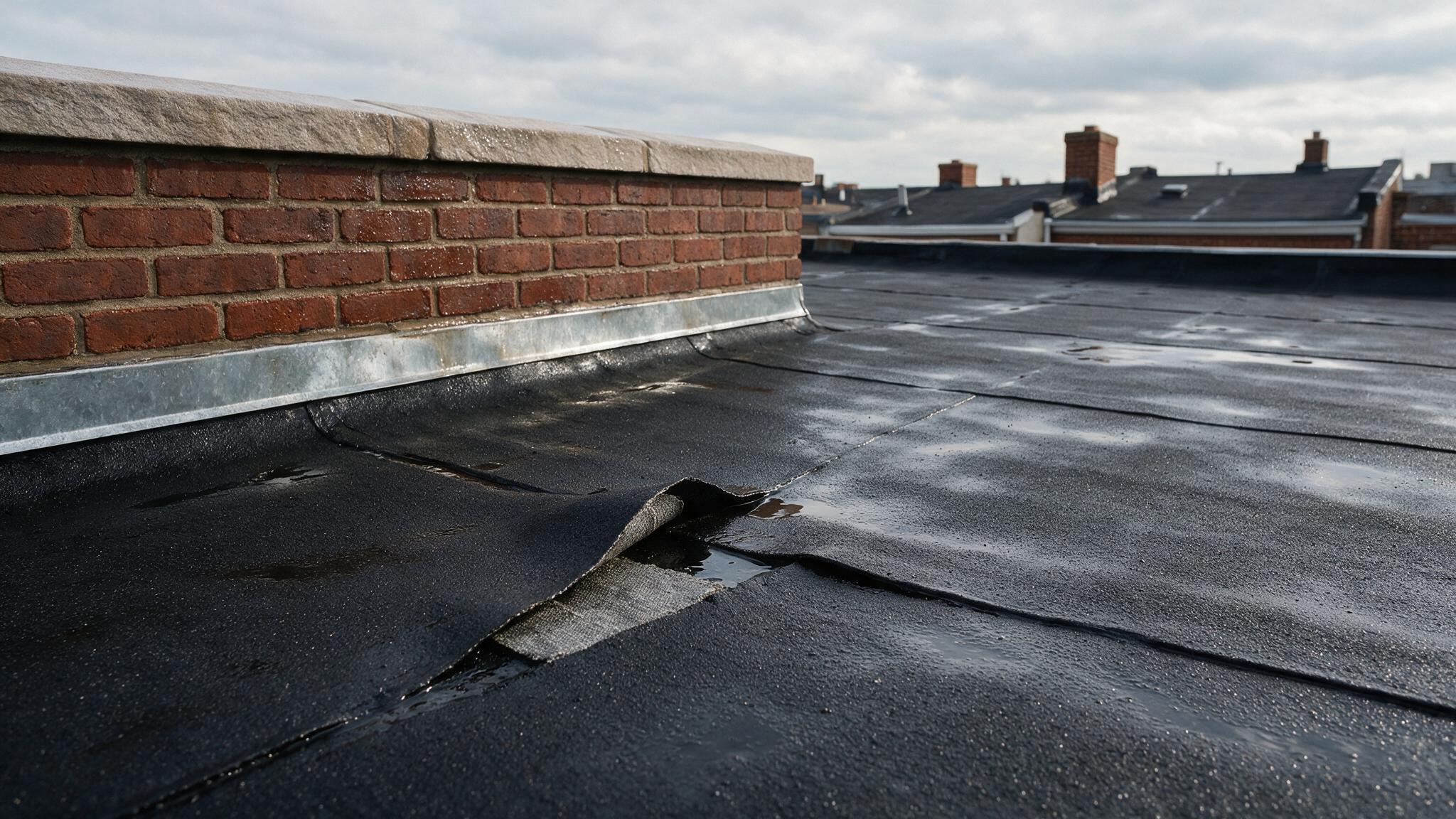
Discovering water dripping from a plaster ceiling or seeing a dark, spreading stain on drywall is an alarming experience for any urban homeowner. In historic neighborhoods like South Philadelphia, Point Breeze, and Center City, the classic attached rowhome presents unique architectural characteristics that can make leak diagnosis challenging. When a roof leak develops, the water rarely drops straight down from the exterior entry point. Understanding how moisture travels through an attached brick structure and knowing the most common points of failure can help you take appropriate action before extensive structural damage occurs.
Why the Interior Stain Is Rarely Directly Beneath the Leak
One of the most frustrating aspects of addressing an active leak is locating its true origin. In a typical Philadelphia rowhome, the roofing membrane sits above wooden roof decking, structural timber rafters, insulation, and interior ceiling finishes. When water breaches the exterior waterproofing, it frequently strikes a sloping rafter or structural joist. Instead of dripping immediately, the water travels along the timber framing, following the path of least resistance.
Water can track horizontally across ceiling cavities or run down party-wall framing for several feet before finding a gap in the plaster or drywall to escape into your living room. Therefore, cutting open a ceiling directly beneath a water stain often reveals dry roof decking above, while the actual exterior failure is located several yards away near a front parapet wall or rear drainage scupper.
Primary Leak Sources on Philadelphia Rowhomes
Urban attached housing relies heavily on low-slope and flat-roof architecture. While modern modified bitumen and EPDM rubber membranes are exceptionally durable, they are exposed to extreme Mid-Atlantic weather swings. Common entry points for water infiltration include:
- Membrane Seam Separations: Over decades of thermal expansion and contraction, the fused or adhered seams where roofing rolls overlap can begin to lift, allowing wind-driven rain to penetrate beneath the surface.
- Masonry Parapet Flashing Failures: Rowhomes are divided by raised brick party walls known as parapets. The metal or membrane flashing that bridges the horizontal roof deck and the vertical brick wall is vulnerable to cracking if the surrounding masonry mortar deteriorates.
- Clogged Rear Scuppers and Drains: Flat roofs rely on positive drainage toward a rear scupper box or internal drain. When autumn leaves, urban debris, or windblown trash block these outlets, water pools on the roof and backs up underneath flashing details.
- Deteriorated Roof Penetrations: Plumbing vent stacks, HVAC refrigerant lines, and exhaust fans pierce the roofing membrane. The rubber boots and mastic sealants surrounding these penetrations degrade over time from intense ultraviolet radiation.
The Dangers of Repeated DIY Patching
When a leak appears, many property owners attempt a quick fix by applying buckets of roofing tar or over-the-counter sealants directly over suspected cracks. While this may temporarily slow an active drip, amateur patching rarely resolves the underlying mechanical failure. Applying impermeable tar over a saturated roofing membrane traps moisture inside the insulation board and wooden decking. This trapped moisture bakes in the summer sun, causing the roof membrane to blister, separate from the deck, and accelerate structural wood rot beneath the surface.
Professional Diagnostics and Immediate Interior Protection
A professional roofing assessment evaluates the entire roof assembly rather than just the visible interior stain. A qualified technician inspects membrane elasticity, seam bonding, brick pointing along parapets, and drainage slopes to identify the root cause of water entry.
If you experience an active leak during a heavy rainstorm, your immediate priority should be interior property mitigation. Place wide containment buckets beneath active drips, move valuables and furniture away from the affected zone, and use a screwdriver to carefully puncture the center of any bulging, water-filled ceiling paint to release trapped pressure and prevent a massive drywall collapse. Most importantly, never attempt to climb onto a wet, slippery roof structure during bad weather; adhering to OSHA fall-protection and ladder-safety standards is paramount to preventing severe personal injury.
When weather conditions clear, partnering with an experienced team for professional roof-leak repair services in Philadelphia ensures that membrane separations, deteriorated flashing, and masonry transitions are repaired using compatible, industry-approved materials that permanently secure your building envelope.
Why is the ceiling stain not directly under the roof leak? Water entering a roof system follows the path of least resistance along structural timber rafters, insulation vapor barriers, and electrical wiring before finding an opening in the ceiling to drip into the living space below.
Can a roof leak be repaired while it is actively raining? Permanent repairs cannot be executed during active rainfall because roofing adhesives, sealants, and torch-applied membranes require dry, clean surfaces to bond properly. Emergency temporary tarping or interior mitigation is used until the weather dries.
Does a single roof leak mean the entire roof needs replacement? Not necessarily. If the roofing membrane is relatively young, flexible, and structurally sound, an isolated leak caused by a separated seam or deteriorated pipe boot flashing can be permanently repaired without replacing the entire roof.
Should I start repairing my interior drywall before the roof is fixed? No. You should always confirm that the exterior roofing failure has been permanently repaired and that the internal wood framing has completely dried before investing in interior plaster, drywall, or paint restoration.