
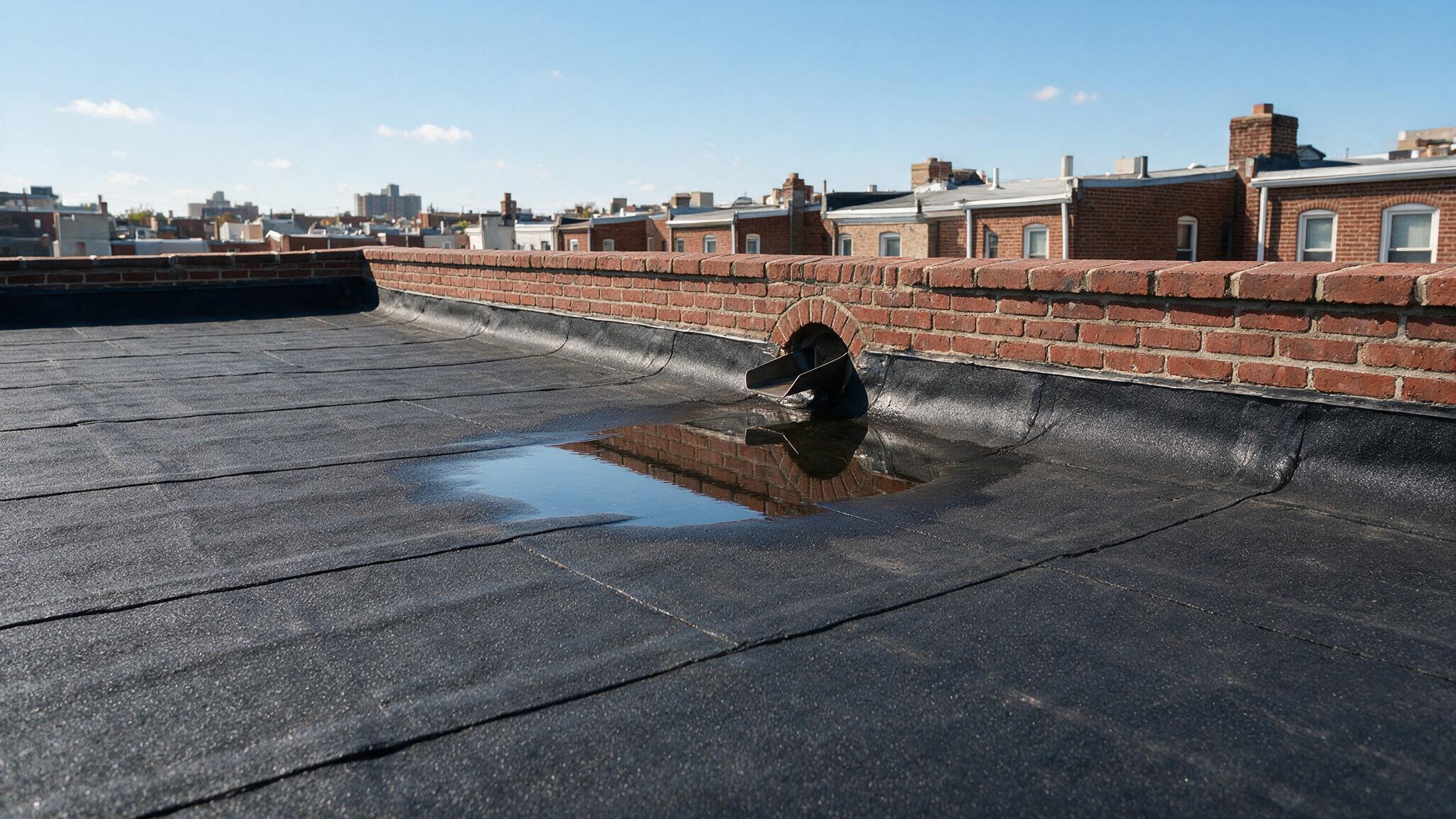
The attached brick rowhome is the backbone of Philadelphia’s residential architecture. Across neighborhoods like Kensington, Port Richmond, and Fishtown, the vast majority of these properties utilize low-slope or flat-roof systems. Unlike steeply pitched suburban roofs that rely on gravity to shed water instantly, a flat roof relies on a continuous, waterproof membrane and a precise, subtle slope to direct water toward drainage outlets. When this delicate balance is disrupted, visible warning signs begin to develop across the roof surface. Recognizing these indicators early allows property owners to address localized wear before it escalates into a complete structural failure.
What Is Ponding Water and Why Is It Dangerous?
The most prevalent warning sign on an urban low-slope roof is ponding water. In homeowner-friendly terms, ponding water is defined as any water that remains standing on a roof surface 48 hours after a rainfall event has ended. While a flat roof is designed to hold moisture temporarily during a downpour, prolonged standing water accelerates membrane deterioration.
Ponding water creates multiple physical hazards for a rowhome structure:
- Excessive Dead Load: Standing water is remarkably heavy, weighing roughly 8.3 pounds per gallon. A large, two-inch-deep puddle sitting across a roof section exerts immense downward weight on wooden deck sheathing and structural framing joists.
- Deflection and Depression Cycles: As timber joists sag under the weight of standing water, the roof deck depresses further. This deeper depression collects even more water during the next storm, creating a destructive cycle that can lead to structural decking collapse.
- Premature Membrane Breakdown: Standing water acts as a magnifying glass for ultraviolet sunlight, baking the asphalt or rubber membrane beneath it and stripping away protective mineral granules. Furthermore, when ponding water freezes during Philadelphia winters, the expanding ice exerts prying pressure on seams and flashing.
Common Causes of Urban Roof Ponding
Standing water rarely occurs without an underlying mechanical cause. Frequent culprits include clogged rear scupper boxes or internal roof drains choked by windblown urban debris. In other instances, ponding is caused by improper initial construction slope, compressed polyisocyanurate insulation board beneath the membrane, or natural foundation settling that has shifted the angle of the roof deck over time. Adhering to National Roofing Contractors Association drainage guidelines ensures that low-slope roof assemblies maintain positive drainage toward designed outlet channels.
Recognizing Bubbles, Blisters, and Soft Spots
Beyond standing water, property owners should visually scan their flat roofs for distinct physical surface deformations:
- Blistering and Bubbling: Raised, bubble-like humps across a modified bitumen or EPDM rubber roof indicate that moisture vapor or air has become trapped between the roofing membrane and the substrate. As the summer sun heats the roof, the trapped air expands, pushing the membrane upward. Puncturing these blisters without proper sealing creates an immediate leak.
- Alligatoring: When an asphalt-based roof membrane loses its volatile oils from prolonged solar exposure, the surface begins to crack in a cross-hatched pattern resembling reptile skin. This indicates advanced material fatigue.
- Soft Spots Underfoot: When walking across a roof for routine gutter cleaning, pay close attention to how the deck feels. Any area that feels spongy, springy, or sinks noticeably beneath your feet indicates that water has penetrated the membrane and rotted the wooden roof decking sheathing underneath.
Targeted Repairs Versus Surface Coatings and Replacement
When warning signs appear, property owners must evaluate the correct intervention scope. Not every damaged roof requires an immediate, costly tear-off. If the primary membrane remains elastic and soft deck spots are absent, localized repairs—such as cutting and re-welding blisters, reinforcing open seams, or clearing drainage scuppers—can safely extend the roof’s operational life.
However, homeowners should be wary of applying over-the-counter elastomeric roof coatings over saturated insulation or persistent ponding water. Coatings are maintenance layers designed to reflect UV rays on healthy roofs; they cannot bridge structural deck depressions or seal rotting wood. When widespread alligatoring, chronic ponding, or structural deck softness occurs, consulting a specialist for professional Philadelphia flat-roof repair or replacement ensures your property receives a properly sloped, fully warranted waterproofing system.
How long should water sit on a flat roof after it rains? A properly sloped flat roof should drain completely within 24 to 48 hours after rain stops. Water remaining on the roof past 48 hours is officially classified as ponding water and requires drainage evaluation.
Can I apply a white silicone coating over standing water on my roof? No. Roof coatings require a clean, dry, and structurally sound surface to adhere. Applying a coating over persistent ponding water or saturated roofing membranes will cause the coating to blister and peel away rapidly.
What causes soft spots on a Philadelphia flat roof? Soft or spongy spots occur when water leaks through the waterproof roofing membrane and saturates the wooden oriented strand board (OSB) or plywood roof decking, causing the timber to rot and lose its structural strength.
Why do blisters form on modified bitumen flat roofs? Blisters form when moisture vapor or air gets trapped between the layers of roofing materials during installation or through small leaks. When heated by the sun, the trapped vapor expands, forcing the top membrane to bubble upward.