
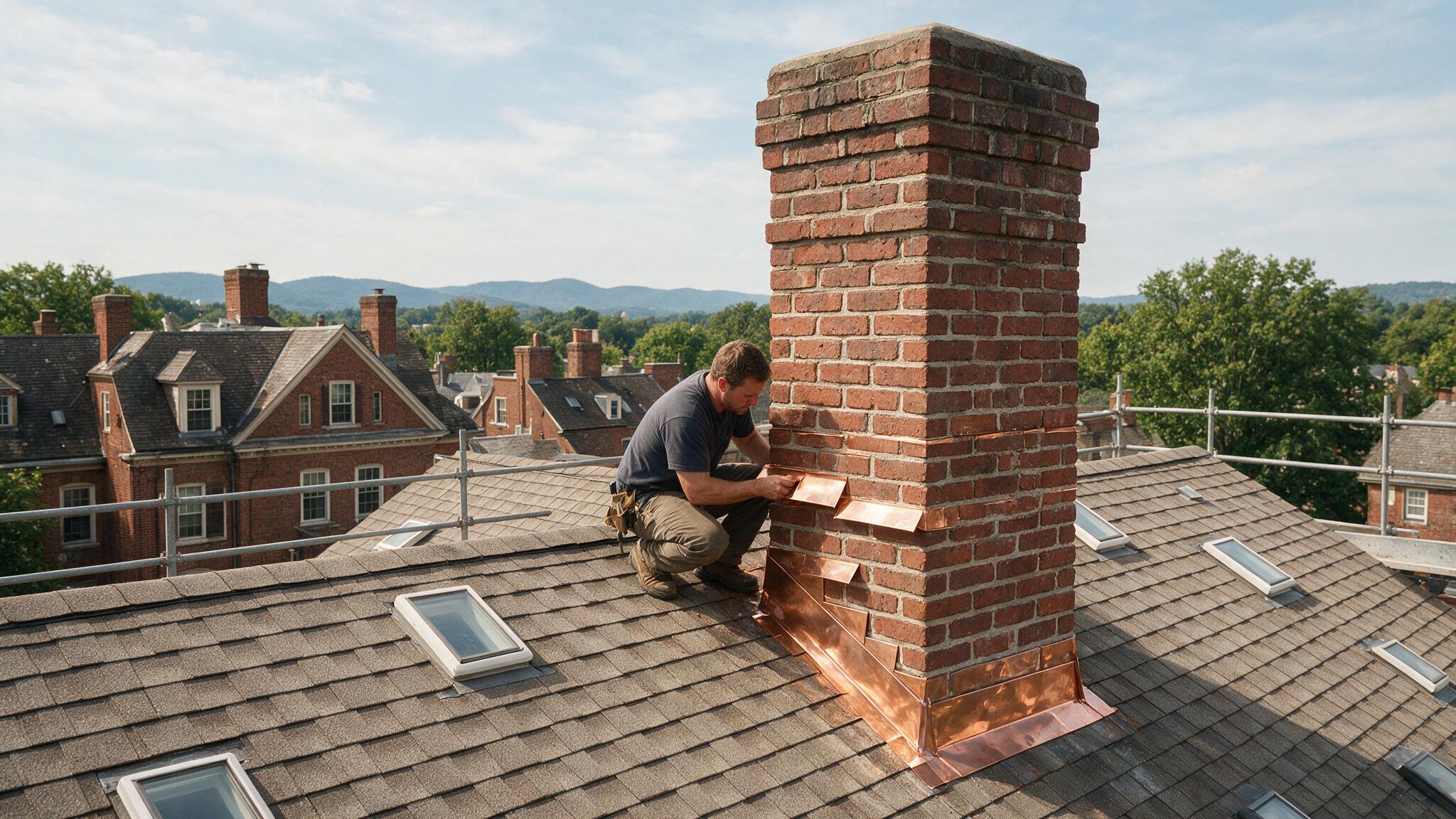
The steep hills of Manayunk and the historic, tree-lined streets of Germantown are defined by their beautiful, towering brick chimneys. However, the intersection where a masonry chimney meets a sloped roof is one of the most mechanically complex areas of any home’s exterior. Because a brick chimney and a wooden roof structure expand and contract at different rates during Philadelphia’s severe temperature swings, keeping this joint watertight requires a highly specialized metal system known as flashing. When this flashing fails, water pours directly into the attic and living spaces. Understanding the mechanics and costs associated with repairing chimney flashing helps you plan for this critical maintenance.
The Mechanics of Chimney Flashing
Applying roofing tar or thick silicone around the base of a chimney is a temporary, amateur fix that is guaranteed to fail. Professional chimney waterproofing relies on a two-part overlapping metal system designed to shed water while allowing the house to flex.
Step Flashing
The first layer is the step flashing. These are L-shaped pieces of aluminum or copper that are woven directly into the layers of asphalt shingles. One side of the “L” sits flat under the shingle, and the other side rests flat against the brick chimney. Because the roof and the chimney move independently, step flashing cannot be bolted directly to the brick; if it were, the metal would tear during high winds or natural settling.
Counter Flashing
To prevent water from running down the brick and getting behind the step flashing, a second layer called counter flashing is installed. The contractor uses a masonry saw to cut a horizontal groove (a reglet) directly into the chimney’s mortar joints. The counter flashing is inserted into this groove, sealed with masonry-grade polyurethane, and folded down to overlap the step flashing. According to the International Association of Certified Home Inspectors (InterNACHI), a properly integrated two-part flashing system is the only approved method for preventing bulk water intrusion at masonry penetrations.
Factors Influencing Repair Costs
Repairing or completely replacing chimney flashing is precision work that requires both roofing and masonry skills. Several variables dictate the final cost of the project.
Material Selection
The type of metal used significantly impacts the budget. Aluminum is standard, cost-effective, and highly durable. However, for historic properties in Germantown where architectural authenticity is paramount, homeowners often request custom-fabricated copper flashing. Copper is significantly more expensive and requires specialized soldering skills, but it will easily outlast the roof itself and develops a beautiful, classic green patina over time.
The Condition of the Masonry
Flashing cannot be secured to crumbling brick. If the mortar joints on the chimney have deteriorated into sand due to years of moisture exposure, the contractor must repoint the brickwork before installing the new counter flashing. If the chimney crown (the concrete cap at the very top of the structure) is cracked, it will allow water to flow straight down the interior of the brick, completely bypassing the new flashing at the roofline. Extensive masonry repairs naturally increase the scope and cost of the project.
Accessibility and Roof Pitch
Manayunk is famous for its exceptionally steep, multi-story rooflines. Working safely on a steep-slope roof requires extensive safety harnessing, roof jacks, and specialized staging equipment. The time required to safely set up and break down this equipment adds to the total labor costs of the repair.
Securing Your Historic Roofline
A leaking chimney can rot your roof decking, destroy attic insulation, and ruin interior plaster ceilings. If you notice water stains near your fireplace or cracked metal at the base of your chimney, do not rely on a bucket of roofing tar. Secure a permanent solution by partnering with our team for professional roof repair in Philadelphia. Contact Philly Roofing LLC to evaluate your Manayunk or Germantown chimney and receive a transparent, comprehensive repair plan today.
FAQs:
- Why is roofing tar a bad idea for sealing a chimney? Roofing tar dries out, cracks, and pulls away from the brick when exposed to UV light and severe temperature changes. It traps moisture underneath and makes properly repairing the flashing much more difficult and expensive later.
- Can I reuse old flashing when getting a new roof? It is highly discouraged. Metal flashing is usually bent, punctured, or stressed during the removal of the old roof. Installing a brand-new roof but reusing old, fatigued flashing is the leading cause of new roof leaks.
- How long does a proper flashing repair take? Depending on the steepness of the roof and whether masonry repointing is required, a professional step and counter flashing replacement typically takes a two-person crew one to two days to complete.