
The Delaware Valley is no stranger to severe weather. From violent summer microbursts to heavy winter nor’easters, the intense wind and rain can inflict immediate, catastrophic damage to your home’s exterior. For property owners in Fishtown and Center City, discovering that high winds have ripped off a section of your shingles or that a heavy tree branch has punctured the roof decking is a high-stress scenario. When the building envelope is violently breached, every minute matters. Understanding the proper protocols for emergency mitigation protects your interior living space and streamlines your subsequent insurance claims.
Immediate Actions Following a Roof Breach
Safety is the absolute first priority during a severe storm. Do not attempt to climb onto a wet, storm-damaged roof in the middle of high winds or in the dark. The risk of fatal falls or electrocution from downed power lines is incredibly high.
Mitigating Interior Damage
If water is actively pouring into your home, your immediate goal is to manage the interior fallout until the storm passes and professional help arrives. Move furniture, electronics, and valuables out of the affected area. Place heavy-duty buckets and plastic bins under active leaks. If a ceiling is heavily bulging with trapped water, carefully poke a small hole in the center of the bulge with a screwdriver to release the water into a bucket below. This prevents the heavy, saturated drywall from collapsing entirely and causing a much larger mess.
Documenting the Scene
Before any clean-up or temporary repairs begin, document everything. Take clear, well-lit photographs and videos of the active leaks, the water pooling on the floor, and the damaged belongings. Once it is safe to step outside, take ground-level photographs of the visible roof damage or fallen branches. According to the Insurance Information Institute (III), comprehensive photo documentation taken immediately after the damage occurs is the most critical asset you have when filing a swift, successful homeowners insurance claim.
Professional Tarping and Securing the Envelope
Once the immediate danger has passed, you must prevent further water intrusion while permanent repairs are coordinated. This requires emergency structural stabilization.
The Professional Tarping Process
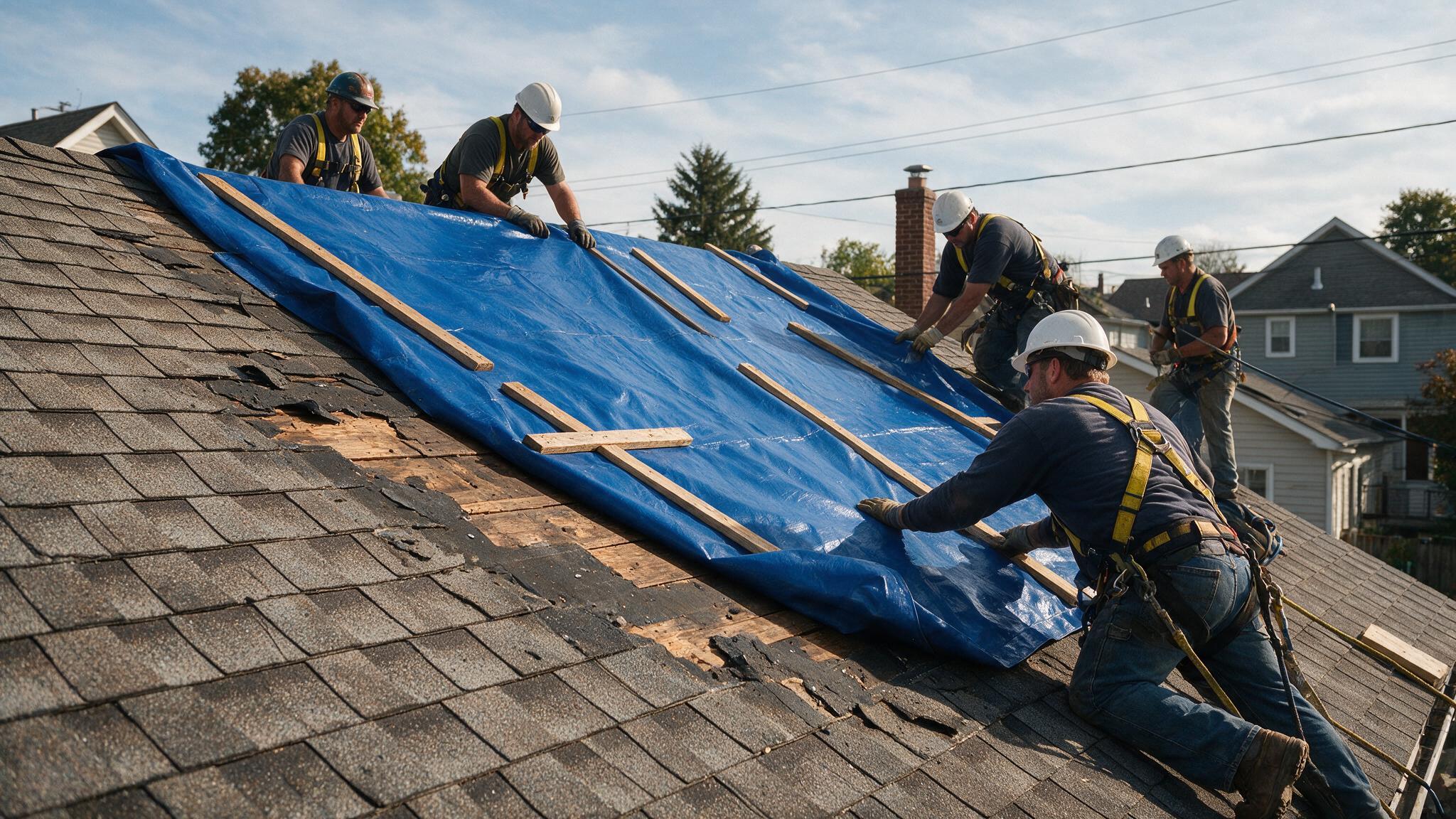
Do not throw a thin plastic painter’s tarp over the hole and weigh it down with bricks. High winds will immediately rip it away. A professional emergency response team utilizes heavy-duty, UV-resistant woven polyethylene tarps. The tarp must extend well past the damaged area and drape over the ridge of the roof to prevent water from running underneath it. Installers wrap the edges of the tarp tightly around long wooden furring strips and screw the wood directly through the shingles into the solid roof deck. This creates a watertight, wind-proof batten system that can protect the property for several weeks or even months while insurance adjusters process your claim.
Temporary Structural Shoring
If a heavy tree limb has crushed the roof structure, tarping is not enough. The broken trusses and rafters pose an immediate threat of collapse. Emergency contractors will install temporary interior shoring—heavy wooden posts and headers—inside the attic to brace the compromised roof decking, ensuring the building is safe to occupy while the permanent structural framing repairs are planned.
Partnering with Rapid-Response Professionals
When a storm breaches your roof, you need a contractor who prioritizes urgent stabilization. Trust our rapid-response team to act as your trusted emergency roofer in Philadelphia, deploying immediately to stop the water and secure your Fishtown property. Contact Philly Roofing LLC to establish your emergency protocols and protect your home from severe weather damage.
FAQs:
- Should I climb on the roof to nail down a tarp during a storm? Absolutely not. Walking on a wet, steep, potentially structurally compromised roof is highly dangerous. Wait until the weather clears and call a professional who has the proper safety harnesses and fall-arrest equipment.
- Will my insurance company pay for the emergency tarping? In almost all cases, yes. Standard homeowners insurance policies require you to take reasonable steps to prevent further damage after a covered loss. Emergency tarping is considered a necessary mitigation expense and is usually fully reimbursable.
- How long can a roof tarp stay on my house? A professionally installed, heavy-duty emergency tarp battened down with wood strips can effectively keep water out for up to 90 days, giving you ample time to negotiate with your insurance adjuster and schedule a permanent roof replacement.