
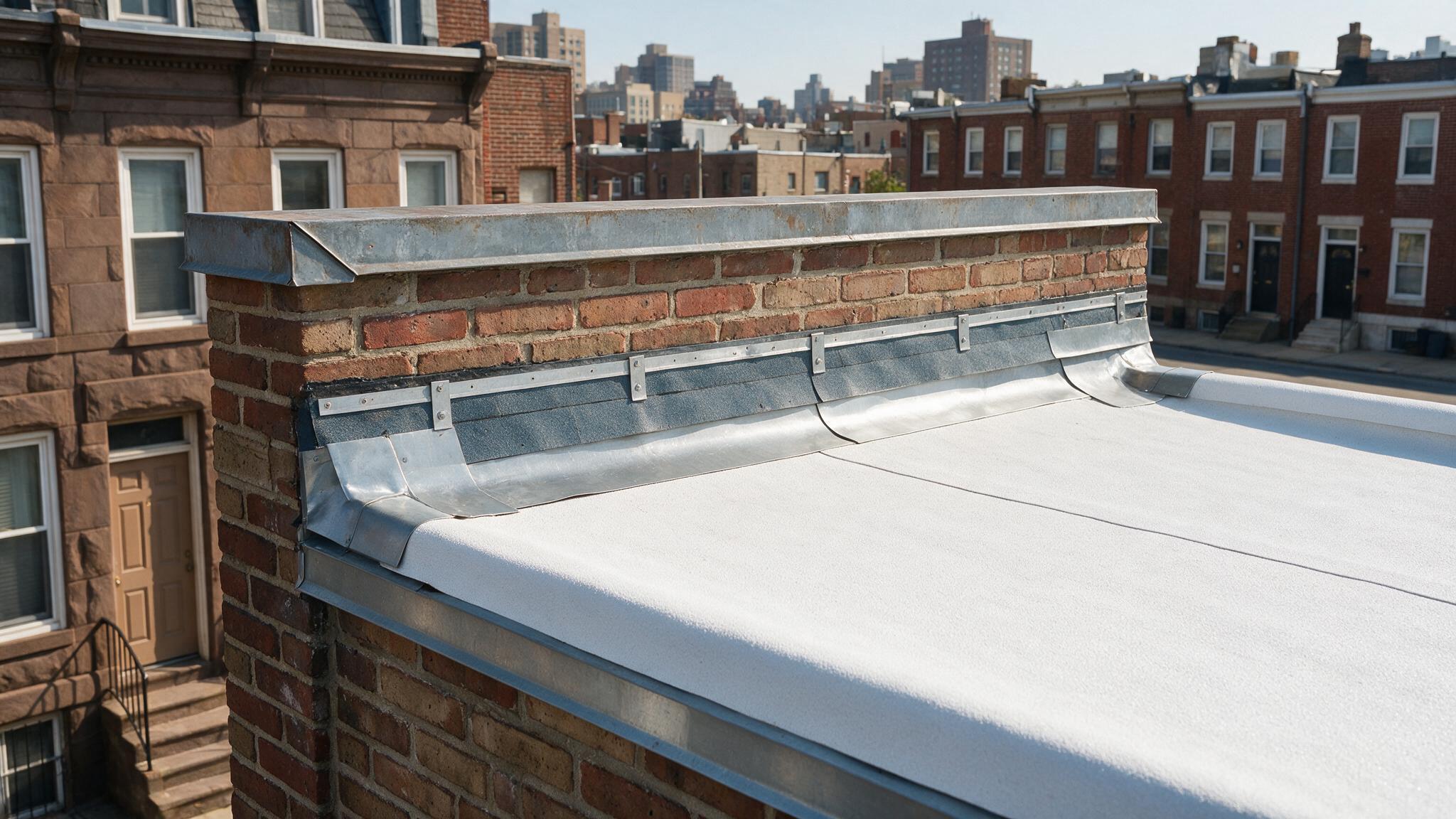
The open field of a flat roof may look intact while perimeter metal has loosened, sealants have separated, or flashing transitions have been patched repeatedly. Edges see wind, movement, and concentrated water.
The Visible Symptom Is Only the Starting Point
Center City and Fairmount rowhomes may use metal coping over parapets, termination bars at walls, edge flashing at rear roofs, and mixed masonry or stucco transitions.
Why Location and Housing Stock Matter
Inspect fasteners, laps, cleats, sealants, membrane tie-ins, corners, scuppers, and the masonry below the metal. A loose cap can admit water behind the wall while the horizontal roof still appears sound.
What the Contractor Should Inspect
Metal, masonry, and membrane expand and move differently. Durable details allow that movement and use overlapping layers to shed water instead of depending on thick surface sealant.
Build the Scope Around Long-Term Service
Repair should restore the drainage path around corners, returns, and changes in elevation. The perimeter deserves the same attention as the membrane field because leaks often start where materials meet.
Frequently Asked Questions
Can roof edge metal be repaired without replacing the whole roof?
Often, when the rest of the roof is serviceable and the repair can integrate with the existing system.
Why does sealant crack at roof edges?
Movement, UV exposure, poor joint design, incompatible materials, and inadequate preparation can contribute.
Can parapet leaks look like membrane leaks?
Yes. Water entering through coping or wall transitions can travel before showing inside.
Plan the Next Step
Philly Roofing LLC can inspect coping, perimeter metal, masonry transitions, and membrane tie-ins before recommending a larger roof scope.
Helpful source: Philadelphia L&I – Construction and Repair Permits