
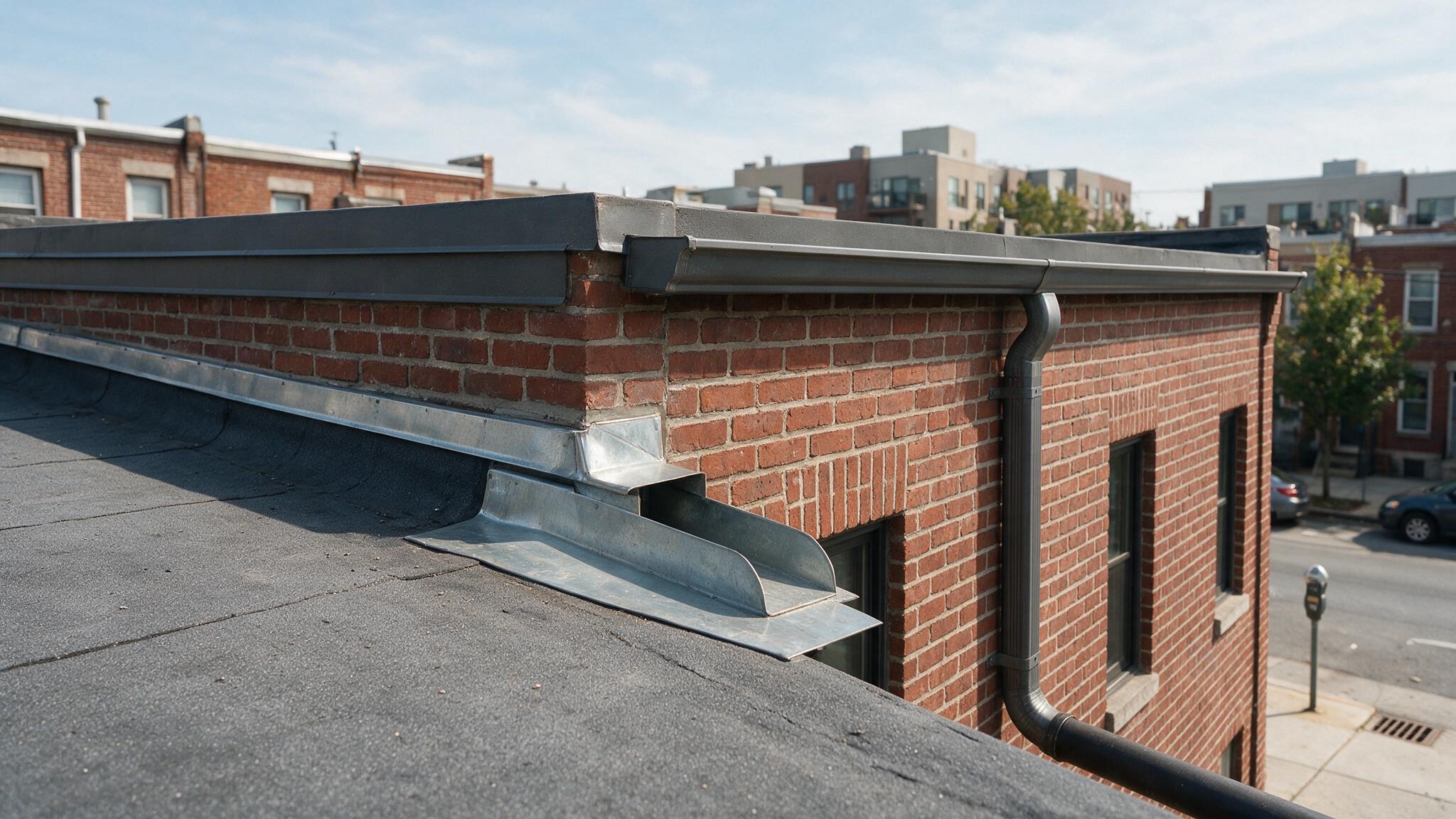
Flat-roof drainage is only as strong as its narrowest point. Leaves, roofing granules, mortar debris, a crushed downspout, or a poor scupper connection can slow water even when roof slope is adequate.
Design From Function Backward
South Philadelphia and Point Breeze rowhomes commonly discharge low-slope roofs through wall scuppers into exterior leaders or downspouts that run through tight rear yards.
What Is Different About These Local Homes
Follow water from roof corners to the scupper, through the outlet, down the vertical pipe, and to the final discharge point. Check staining, loose joints, debris, standing water uphill, and damaged brackets.
Resolve These Details Before Ordering Materials
A clear scupper cannot protect the roof if the downspout below is blocked. Likewise, a working downspout can still leak if the membrane-to-scupper transition is open or poorly sealed.
The Takeaway for Homeowners
Seasonal maintenance should include roof corners, scuppers, strainers where present, downspouts, and discharge areas – especially after nearby masonry or construction work creates debris.
Frequently Asked Questions
Can a clogged downspout cause roof ponding?
Yes. Water can back up at the outlet and remain on the roof longer.
Should homeowners clean a flat roof themselves?
Only when access is safe and the roof can be reached without fall risk or membrane damage.
What causes staining below a scupper?
Overflow, loose connections, failed flashing, or water tracking behind the outlet can all contribute.
Plan the Next Step
Philly Roofing LLC provides gutter, downspout, scupper, and drainage repairs based on the complete path water takes off a Philadelphia roof.
Helpful source: Philadelphia Water Department