
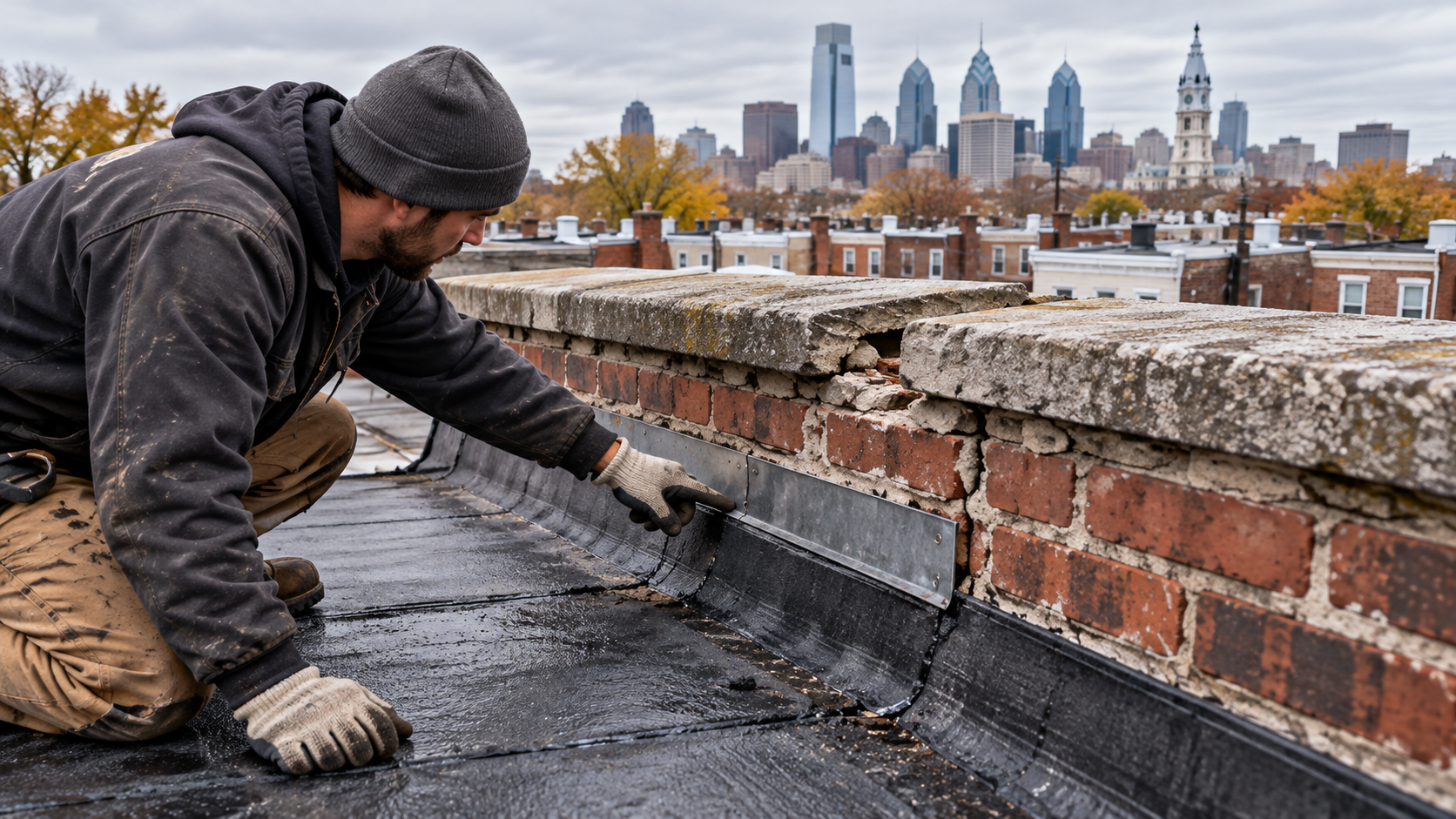
Ask any roofer in Philadelphia where flat roofs leak most often, and the answer is rarely the middle of the membrane. It is the edges: the brick parapet walls at the front and rear of the house and the party walls shared with neighbors. In neighborhoods like South Philadelphia, Fish-town, Point Breeze, and Brewerytown, these masonry walls take the full force of wind-driven rain, freeze-thaw cycles, and decades of patching.
When a ceiling stain appears along an exterior or shared wall on the top floor, homeowners often assume the roof membrane has failed. In many cases, the membrane is fine. Water is entering through the wall above the roof and running down behind the flashing.
1. How Parapet and Party Wall Flashing Works
A properly built roof-to-wall connection uses several layers working together:
- Base Flashing: The roofing membrane turned up the face of the wall, typically 8 inches or more, and fully adhered.
- Counter-flashing: Metal or membrane flashing set into a mortar joint (reglet) or surface-mounted with a termination bar, lapping over the base flashing so water cannot get behind it.
- Coping or Cap: Metal coping, stone, or terra-cotta caps on top of the parapet that shed water away from the wall core.
- Through-Wall Flashing: In some walls, flashing built into the masonry that directs water absorbed by the brick back out to the exterior.
2. Common Failure Points
Parapet Leak Inspection Checklist:
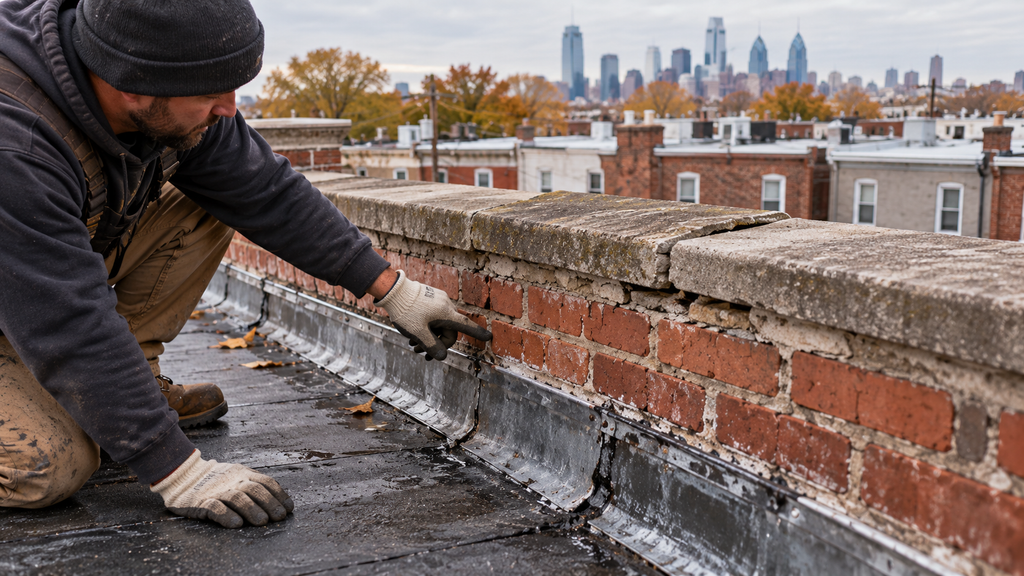
- Open Mortar Joints and Spalled Brick: Deteriorated joints on the top courses let water soak into the wall and bypass flashing below.
- Cracked or Loose Coping: Open joints between coping sections or caps without a drip edge send water straight down the wall.
- Counter-flashing Pulled Out of the Reglet: Sealant-only details dry out and separate, leaving an open gap behind the base flashing.
- Roof Coating Used as Flashing: Silver or white coatings brushed up the wall may look sealed, but they crack at the transition and trap water.
- Neighbor Roof Tie-Ins: On party walls, a poorly lapped seam between your roof and the adjoining roof is a frequent hidden leak source.
3. Repair Options: Patch, Re-Flash, or Rebuild
The right repair depends on the condition of the masonry. Where brick and mortar are sound, new base flashing and properly terminated counterflashing usually resolve the problem. Where the top courses are loose or saturated, repointing or rebuilding the top of the parapet before re-flashing is the only lasting fix. Party wall repairs may require coordination with the neighbor, because both roofs share the same wall.
4. Permits and Masonry Work
Larger masonry repairs or parapet rebuilds can require a permit in Philadelphia, and properties in historic districts may need additional review. Check current Philadelphia building and repair permit guidelines before work begins.
Fixing the wall, not just the membrane, is what stops recurring top-floor leaks. Explore our roof repair services to schedule a parapet and flashing inspection with Philadelphia Roofing Experts.