
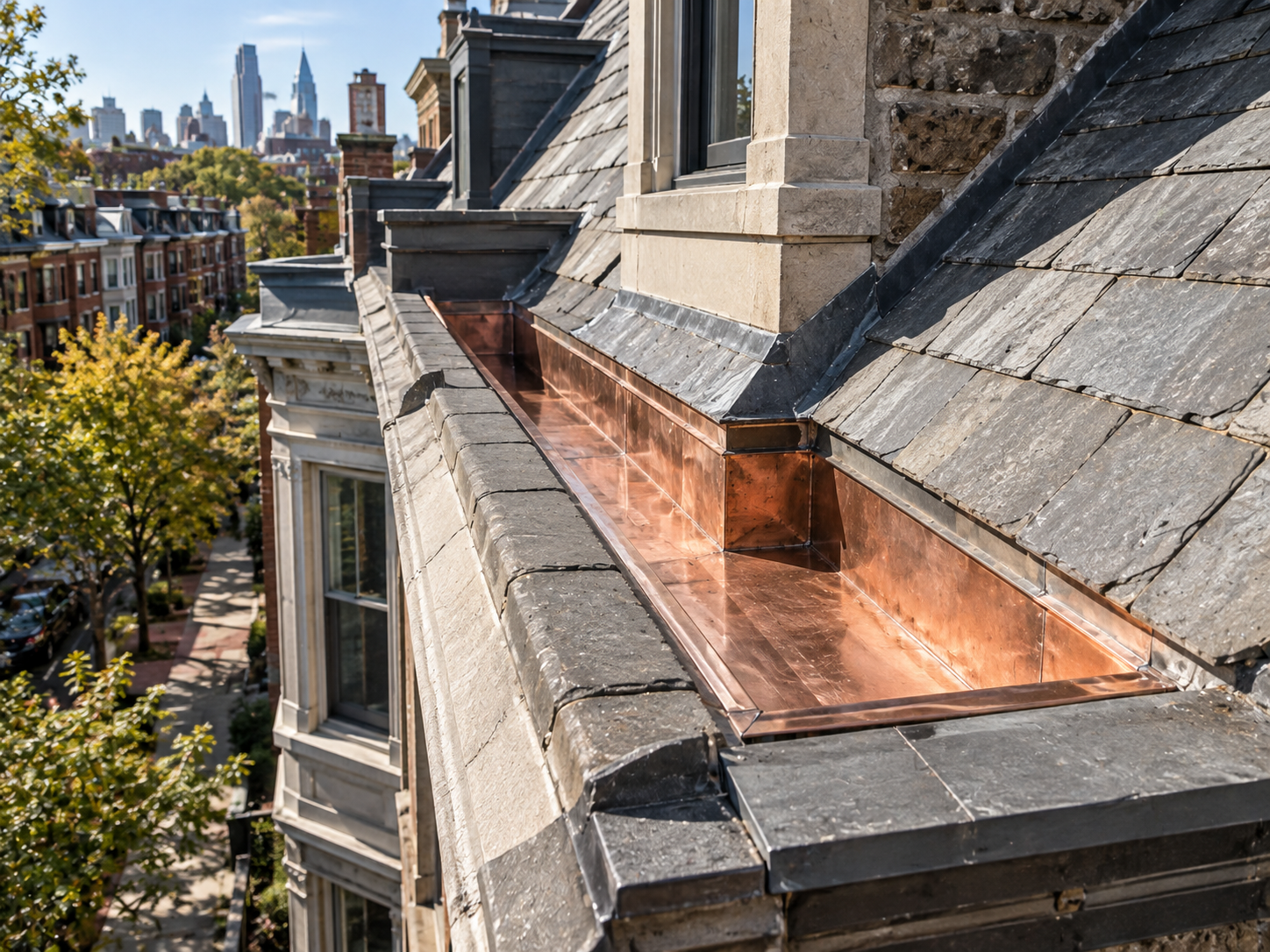
Repairing and Relining Box Gutters on Older Philadelphia Homes is a practical planning question for property owners in Philadelphia. The right approach depends on the existing conditions, the way the space or system is used, and how the proposed work interacts with surrounding materials. Understanding those details early helps prevent a cosmetic decision from creating a larger construction, maintenance, or code problem later. That review should happen before demolition, fabrication, or installation begins.
Box Gutters Are Built into the Roof Edge
Unlike hanging gutters, traditional box gutters are formed within the roof or cornice assembly. Their metal lining, seams, outlets, and surrounding wood must work together. A leak may damage fascia, framing, masonry, or interior finishes before water becomes visible at the exterior edge.
Find the Failure Before Choosing a Liner
Common problems include open soldered seams, punctures, corrosion, poor outlet transitions, inadequate slope, and movement between metal sections. Debris can keep the lining wet and conceal small defects. Inspection should also check the condition of the wood substrate because a new liner installed over decayed support will not remain stable.
Relining Requires Expansion and Drainage Details
Long metal runs expand and contract with temperature. Material selection, joint design, cleats, seams, and termination details need to accommodate that movement while directing water to the outlet. The liner should extend high enough beneath the roofing and wall flashing to handle backed-up water without relying on exposed sealant as the primary defense.
Coordinate Cornice and Roof Repairs
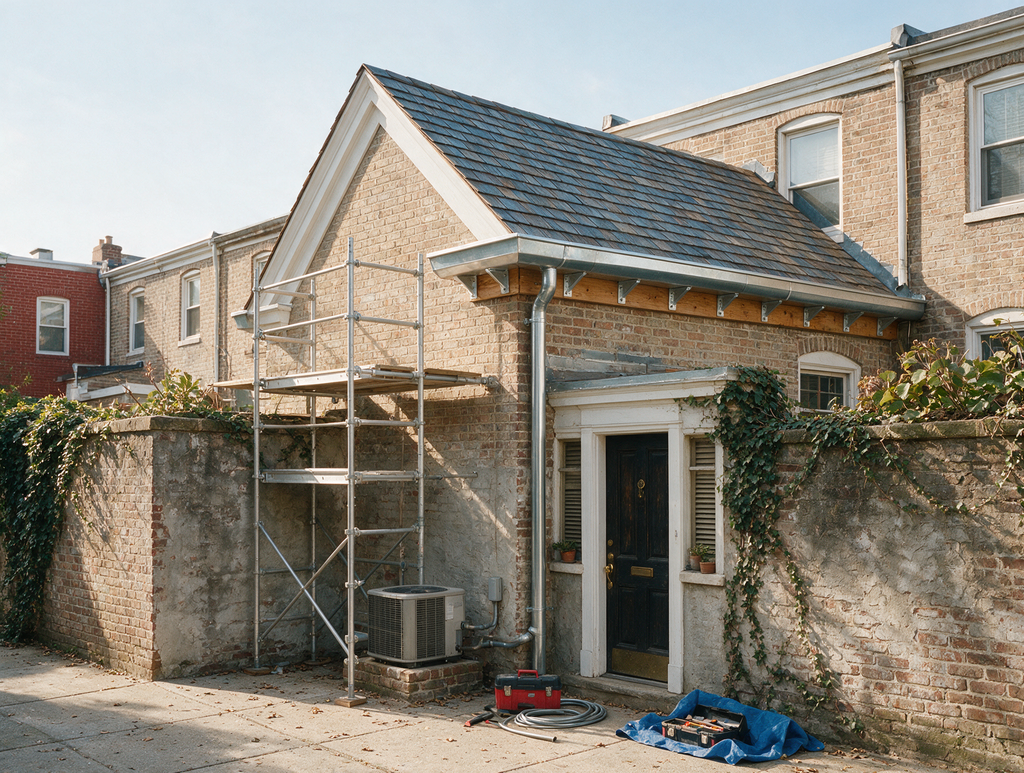
Box gutter work often touches roofing, sheet metal, trim, and historic cornice elements. Removing one component can expose hidden damage in another. A coordinated scope should define which pieces are repaired, replaced, primed, painted, or temporarily protected so the finished edge drains correctly and preserves the building’s appearance.
Questions to Resolve Before Work Begins
Before authorizing a repair, document when the symptom appears, what changed before it started, and which areas or fixtures are affected. Ask the contractor to separate observation from diagnosis, explain what testing or selective opening is needed, and identify the condition that would change the proposed solution. The written scope should state what is included, how adjacent finishes will be protected, how concealed damage will be handled, and what will be tested before the repair is considered complete. Request photographs of concealed conditions and completed work where access will later be closed. Keep model numbers, material information, test results, permits, and care instructions with the property records so a future service provider can understand what was repaired and how the finished system is intended to perform.
Planning the Next Step
Property owners should compare the visible condition with the broader assembly, confirm any permit or manufacturer requirements that apply, and document the proposed scope before materials are ordered. Guidance from SMACNA technical standards can help frame the technical questions, while an on-site evaluation determines what is appropriate for the individual property. If your roof, skylight, chimney, or gutter system shows signs of trouble, contact Philly Roofing Pros for an evaluation of the affected roof components and appropriate repair options.
Learn more about gutter repair.