
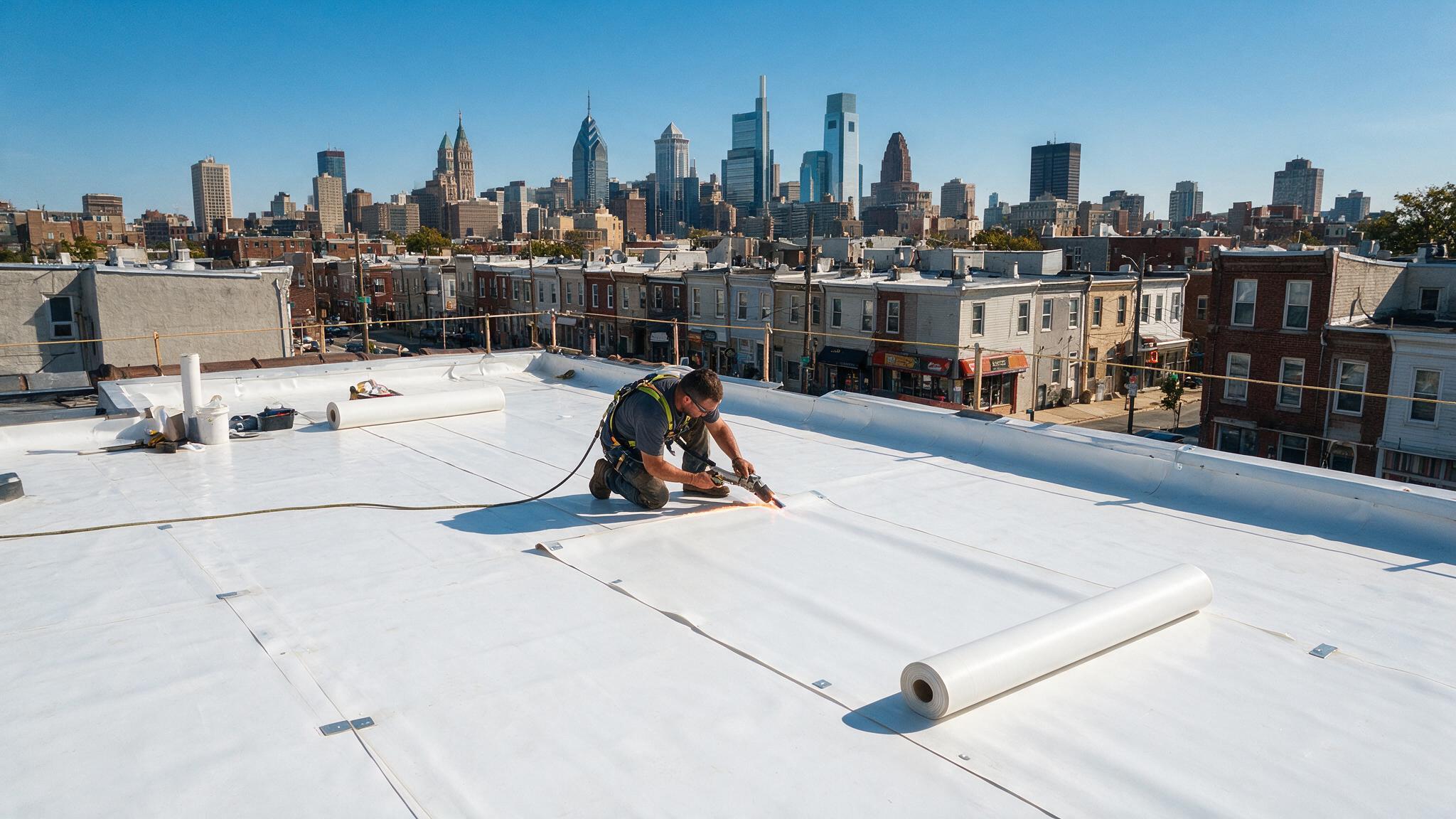
Low-slope and flat roofs are defining architectural features of rowhomes and commercial properties across Center City, South Philadelphia, Fishtown, and Port Richmond. Because flat roofs have minimal pitch to shed water quickly, their waterproofing membranes, scuppers, and parapet seams endure continuous weather exposure.
Over time, UV radiation, seasonal freeze-thaw cycles, and thermal expansion cause membrane seams to split, coatings to crack, and water to pond. Timely flat-roof repairs prevent minor seam failures from turning into interior ceiling leaks and hidden roof deck rot.
Common Flat-Roof Membrane Systems and Failure Patterns
Understanding the type of flat-roof membrane installed on your building helps identify specific repair needs:
+——————————————————————-+
| FLAT-ROOF MEMBRANE SYSTEM PROFILES |
| |
| * Modified Bitumen (Torch-Down) –> Seam Separation & Blistering |
| * EPDM Rubber Single-Ply –> Lap Seam Splitting & Shrink |
| * TPO / PVC Reflective Systems –> Puncture Leaks & Weld Gaps |
+——————————————————————-+
1. Modified Bitumen (Torch-Down) Roofing
Common on traditional rowhomes, modified bitumen consists of asphalt-based sheets reinforced with fiberglass or polyester. Over time, UV rays dry out the asphalt, causing surface cracking, granule loss, and seam separation along overlap joints.
2. EPDM Synthetic Rubber Membranes
EPDM single-ply rubber roofs offer excellent flexibility. However, adhesive lap seams can degrade after 12 to 15 years, allowing wind-driven rain to slip beneath the membrane.
3. TPO Heat-Welded Membranes
Modern white TPO (Thermoplastic Polyolefin) membranes reflect heat energy efficiently, lowering cooling demands. Leaks on TPO roofs typically stem from mechanical punctures, failing perimeter termination bars, or improperly welded seam edges.
Building owners needing durable membrane repairs trust our https://phillyroofingpros.com/contact/
Key Areas Vulnerable to Flat-Roof Leaks
Water intrusion on low-slope roofs frequently occurs at perimeter flashings and roof penetrations rather than open membrane surfaces:
+—————————————————————–+
| FLAT-ROOF LEAK HIGH-RISK ZONES |
| |
| 1. Parapet Wall Termination Cap Strips & Metal Flashings |
| 2. Drainage Scupper Boxes and Roof Drain Strainer Bowls |
| 3. Skylight Curb Flashing Borders and Vent Pipe Boots |
+—————————————————————–+
Guidelines published by the National Roofing Contractors Association: Low-Slope Membrane Roof Guidelines → https://www.nrca.net emphasize maintaining watertight seals at parapet wall terminations and cleaning drain scuppers regularly to prevent ponding water accumulation.
Frequently Asked Questions
What causes ponding water on a flat roof, and how does it damage membranes?
Ponding water occurs when roof deck sagging or clogged drains prevent rainwater from draining within 48 hours. Standing water accelerates membrane breakdown, adds weight to structural joists, and increases the risk of seam leaks.
Can a flat roof be repaired during winter weather in Philadelphia?
Yes. Technicians use cold-process elastomeric mastics, specialized membrane patches, or mechanical termination sealants engineered to bond securely during cold weather conditions.
What is the difference between silver elastomeric coating and a full roof replacement?
Silver reflective roof coatings provide UV protection and seal microscopic hairline cracks on sound bitumen roofs, extending service life by 3 to 5 years. However, coatings cannot fix rotted roof decking or wet insulation, which require membrane replacement.
How often should flat-roof drain scuppers and gutters be cleared?
Scuppers and roof drains should be inspected and cleared of leaves and debris at least twice a year—in late autumn and early spring—to maintain free drainage.
Safeguard Your Flat-Roof Assembly
Do not allow minor seam splits or ponding water to compromise your building’s interior in Center City, South Philadelphia, Fishtown, or Port Richmond. Professional flat-roof maintenance and targeted repairs protect underlying roof decks and preserve building integrity. Contact Philly Roofing LLC today to schedule a thorough flat-roof evaluation.