
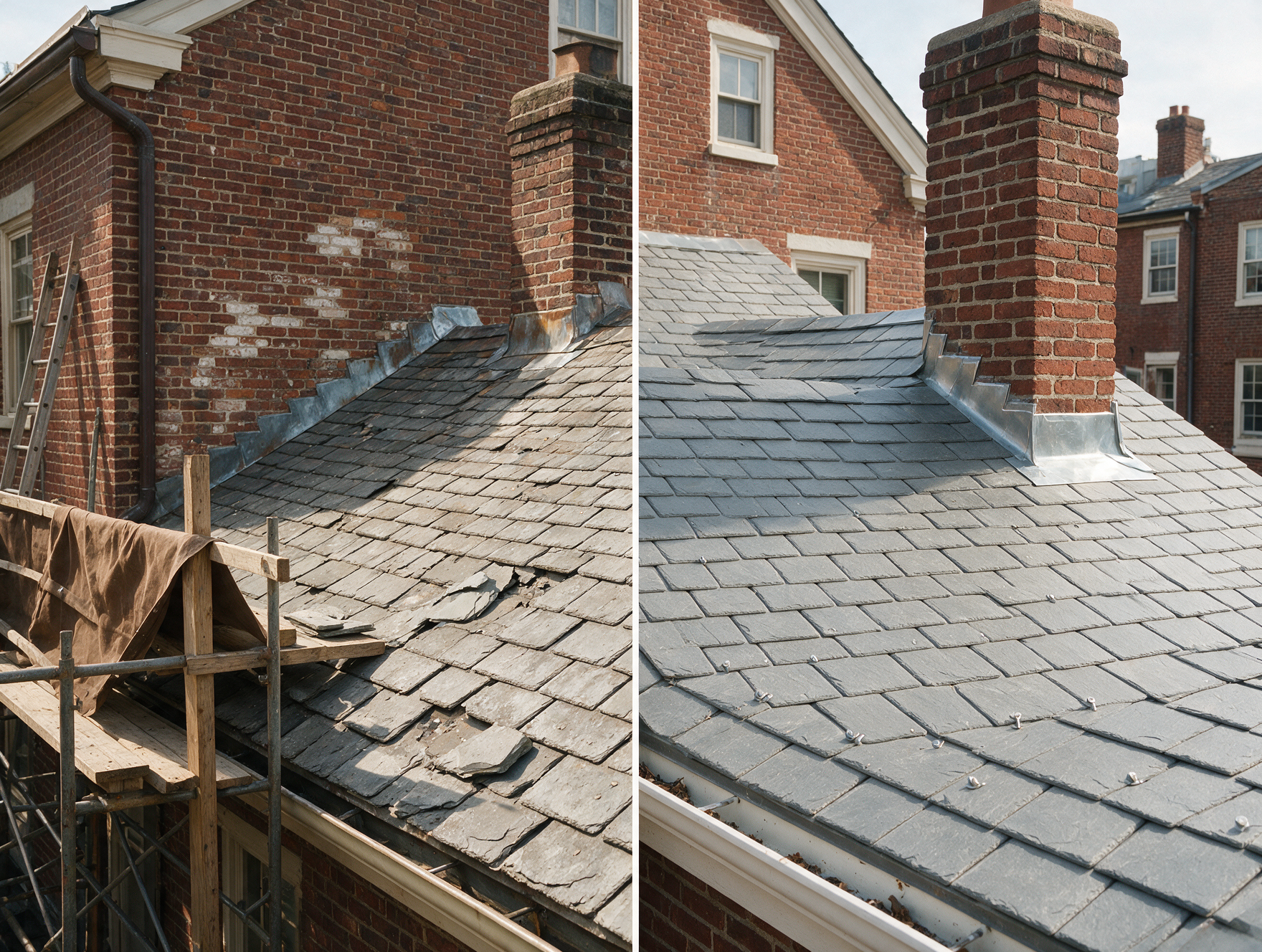
When to Repair vs. Replace a Historic Slate Roof is a practical planning question for property owners in Philadelphia. The right approach depends on the existing conditions, the way the space or system is used, and how the proposed work interacts with surrounding materials. Understanding those details early helps prevent a cosmetic decision from creating a larger construction, maintenance, or code problem later. That review should happen before demolition, fabrication, or installation begins.
Slate Roofs Fail Piece by Piece and as Systems
A few broken or slipped slates do not automatically mean the roof needs replacement. Individual units can be damaged by impact, fastener corrosion, foot traffic, or previous repairs. Replacement becomes more likely when the slate itself is widely deteriorated, fasteners are failing throughout, or the supporting deck and flashings require extensive reconstruction.
Evaluate the Slate Type and Remaining Life
Slate varies significantly in hardness, absorption, thickness, and service life. A visual review should look for flaking, softness, repeated breakage, and patterns across different roof exposures. Testing representative pieces may be appropriate on larger projects. A repair plan should use compatible replacement slate rather than assuming every dark gray unit performs the same.
Flashings Often Control the Decision
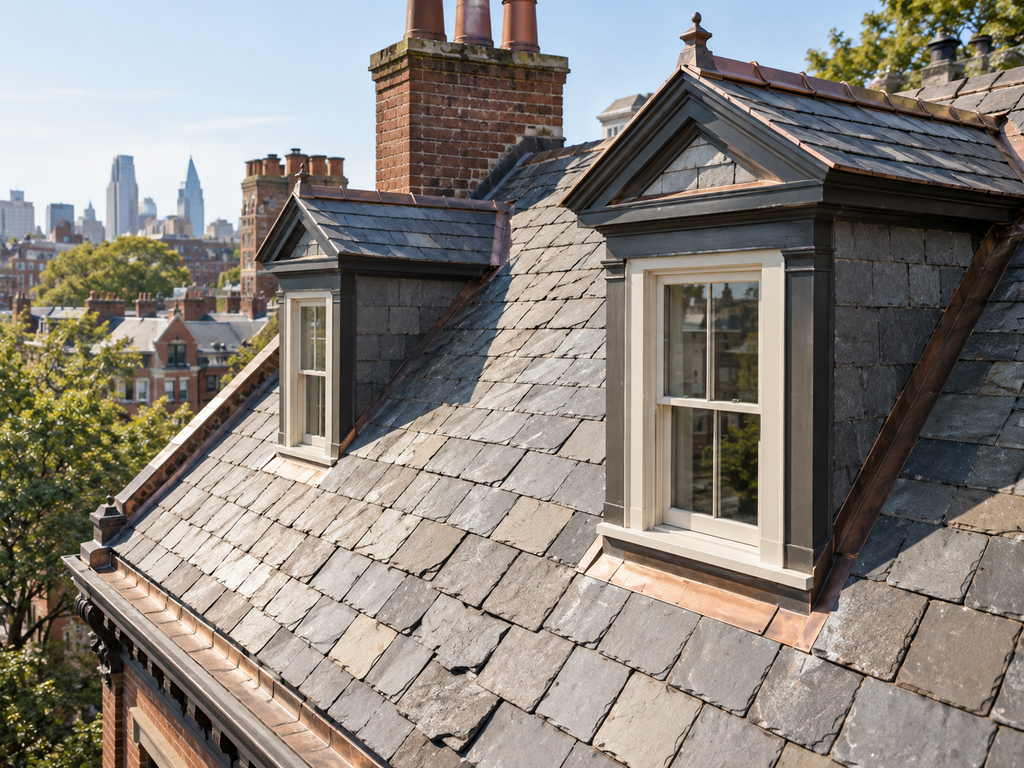
Valleys, chimneys, parapets, dormers, and roof penetrations may fail before the field slate. If surrounding slate remains serviceable, carefully replacing metalwork can extend the roof’s life. When access requires removing large areas of brittle slate, the labor and breakage risk can shift the economics toward a broader renovation.
Avoid Repairs That Damage Reusable Slate
Surface coatings, excessive sealant, exposed face-fastening, and walking directly on slate can create new failures. Appropriate hooks, concealed fastening methods, staging, and salvage practices protect sound material. A written condition map helps the owner compare targeted repair with phased or complete replacement.
Questions to Resolve Before Work Begins
Before work begins, document the existing condition and confirm which decisions require a licensed trade, design professional, permit, inspection, or manufacturer review. Ask how the proposed work connects to adjacent materials and building systems, which areas need temporary protection, and what access must remain after completion. A clear written scope should also explain how concealed conditions, substitutions, schedule changes, cleanup, and final testing will be handled. Keep product instructions, approved drawings, inspection records, photographs, and final selections together with the property documents. These records help future owners and service professionals understand what is behind finished surfaces and which maintenance practices are appropriate for the completed work.
Planning the Next Step
Property owners should compare the visible condition with the broader assembly, confirm any permit or manufacturer requirements that apply, and document the proposed scope before materials are ordered. Guidance from National Park Service Preservation Brief 29 can help frame the technical questions, while an on-site evaluation determines what is appropriate for the individual property. If your roof, skylight, chimney, or gutter system shows signs of trouble, contact Philly Roofing Pros for an evaluation of the affected roof components and appropriate repair options.
Learn more about roof renovation.